Author name: Aman

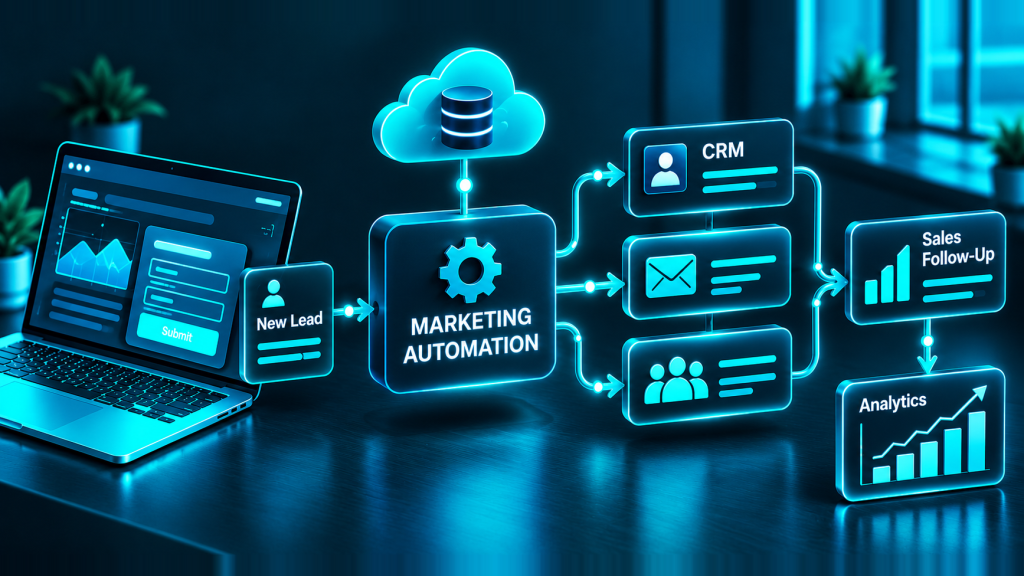
A glowing cyan flowchart on a desk demonstrating a "MARKETING AUTOMATION" pipeline, showing data moving from a laptop lead form through CRM, Sales Follow-Up, and Analytics blocks.
Marketing Automation

Digital Marketing Automation

Running a business online is not always easy. You need to manage social media accounts, send emails, follow up with potential customers, create content, run advertisements, and check your marketing results. When all these tasks are done manually, they can take a lot of time and effort. Sometimes, businesses even miss important opportunities because they are too busy handling everyday work. This is where digital marketing automation becomes useful. Digital marketing automation helps businesses manage repetitive marketing tasks automatically with the help of software and technology. It allows businesses to send emails at the right time, follow up with leads, schedule social media posts, organize customer information, and track campaign performance with less manual effort. For example, imagine someone visits your website and signs up for your newsletter. Instead of manually sending that person a welcome email, an automation tool can send it automatically. A few days later, the same tool can send another email explaining your services or sharing helpful information. This process saves time and helps businesses communicate with customers more consistently. Digital marketing automation is useful for small businesses, startups, marketing agencies, online stores, educational institutions, and large companies. It helps marketers focus more on planning, creativity, and customer relationships instead of spending their entire day on repetitive tasks. In this guide, we will explore what digital marketing automation is, how it works, its benefits, different types, popular tools, real-life examples, common mistakes, and how you can start using it for your business. What Is Digital Marketing Automation? Digital marketing automation is the process of using software and technology to perform repetitive marketing activities automatically. These activities may include email marketing, lead generation, customer follow-ups, social media scheduling, audience segmentation, and campaign reporting. The main purpose of automation is to make marketing activities more organized, efficient, and consistent. Without automation, a marketer may need to send every email manually, update customer records one by one, and remember when to contact each potential customer. As a business grows, managing these activities becomes more difficult. Automation helps manage these tasks through predefined rules, schedules, and customer actions. For example, a business can create a simple automated process: A visitor opens the company’s website. The visitor fills out a contact form. The visitor receives an automatic confirmation email. The business stores the visitor’s details in a customer management system. A follow-up email introduces a relevant service. The marketing team receives a notification when the visitor requests a consultation. These actions can happen without someone manually completing every step. However, digital marketing automation does not mean that the entire marketing process runs without human involvement. Businesses still need to create good content, understand their audience, make decisions, and maintain genuine relationships with customers. Automation simply makes the process easier to manage. How Does Digital Marketing Automation Work? Digital marketing automation works by connecting customer information, marketing tools, and predefined actions. Once the system is configured, it responds to specific events or conditions. Most automation processes have four basic elements: a trigger, a rule, an action, and a result. 1. Trigger A trigger is an event that starts an automated process. For example, a customer may subscribe to a newsletter, download a guide, complete a purchase, or submit a contact form. 2. Rule or condition A rule determines what should happen next. It can help a business decide which message to send, when to send it, or which audience should receive it. For example, an online store may send different emails to customers who purchased a product and visitors who only added a product to their cart. 3. Action An action is the task performed by the automation software. It might send an email, update a customer record, assign a lead to a salesperson, or schedule a notification. 4. Result The result is the outcome of the automated process. A business may receive more inquiries, improve customer engagement, save time, or gain better information about campaign performance. Consider a digital marketing agency that wants to attract new clients. When someone downloads its free SEO checklist, the system can automatically send the checklist by email. Later, it can share SEO tips and explain the agency’s services. If the person requests a consultation, the agency’s team can contact them personally. This combination of automation and human communication creates a more organized customer experience. Why Is Digital Marketing Automation Important? Modern customers interact with businesses through many online channels. They may discover a company through Google, visit its website, follow it on social media, subscribe to its emails, and eventually purchase a product or service. Managing these interactions manually can become complicated. Digital marketing automation helps businesses maintain communication across different stages of the customer journey. Instead of depending entirely on manual work, businesses can create repeatable processes that support their marketing goals. Here are some reasons why automation is becoming important. It saves time: Repetitive activities can run automatically, giving marketers more time for creative and strategic work. It improves consistency: Customers can receive timely messages instead of waiting for someone to remember a follow-up. It supports personalization: Businesses can send relevant messages based on customer interests, preferences, and previous actions. It organizes customer information: Automation can help collect and update information in one system, making it easier to understand customer needs. It supports business growth: A well-designed workflow can manage more leads and customer interactions without requiring every task to be handled manually. Automation is not a replacement for good marketing. It is a way to deliver good marketing more efficiently. 1. Email Marketing Automation Email marketing automation is one of the most common forms of digital marketing automation. It allows businesses to send emails automatically when a subscriber performs a particular action or reaches a scheduled point in a campaign. For example, when someone joins an email list, the system can send a welcome email. After a few days, it may send useful tips, product information, or a special offer. Common email automation activities include: Welcome emails for new subscribers. Follow-up
iska ekdm short alt text do
Marketing Automation

Lead Generation Automation

Every business needs customers to grow. Whether you run a small business, an online store, or a digital marketing agency, finding people who are genuinely interested in your products or services is an important part of success. However, generating leads is not always easy. You need to attract the right audience, collect their information, respond to inquiries, and follow up at the right time. When all these activities are handled manually, they can take a lot of time. Sometimes, a business receives an inquiry but forgets to respond. In other situations, a potential customer loses interest because the business takes too long to provide information. These small problems can lead to missed opportunities. This is where lead generation automation becomes useful. Lead generation automation uses software and technology to attract potential customers, collect their contact information, organize leads, and move them toward the next step in the buying process. Instead of managing every task manually, businesses can create automated systems that help them capture and manage leads more efficiently. For example, imagine someone visits your website and fills out a form to learn about your SEO services. An automated system can send a confirmation email, save the person’s information in a customer management system, and notify your sales team. It can also send helpful information about SEO services if the person has agreed to receive marketing emails. This process helps the business respond quickly and maintain communication with potential customers. Lead generation automation is useful for digital marketing agencies, real estate companies, educational institutions, healthcare businesses, online stores, and many other industries. In this guide, you will learn what lead generation automation is, how it works, its benefits, the tools businesses use, practical examples, common mistakes, and how you can start automating your own lead generation process. What Is Lead Generation Automation? Lead generation automation is the process of using software to automate different activities involved in attracting, collecting, organizing, and following up with potential customers. A lead is a person or business that has shown some interest in a product or service. This interest might come from filling out a contact form, downloading a guide, requesting a quotation, registering for a webinar, or subscribing to a newsletter. However, not every lead is ready to purchase immediately. Some people are only researching their options, while others are actively looking for a service provider. Automation helps businesses manage these different situations through predefined workflows. For example, a digital marketing agency may offer a free website SEO audit. When a visitor submits their name, email address, and website URL, an automated workflow can: Save the lead’s information in a CRM system. Send a confirmation email. Notify the appropriate team member. Assign the inquiry to the relevant service category. Send useful follow-up information when appropriate. Remind the sales team to contact the lead. These activities can happen automatically, reducing the amount of repetitive work required from the marketing team. The important thing to understand is that lead generation automation does not mean collecting as many email addresses as possible. Its real purpose is to help businesses attract relevant people, provide useful information, and create a smoother path from initial interest to a genuine business conversation. Why Is Lead Generation Automation Important? Businesses often lose potential customers not because their services are poor, but because their lead management process is disorganized. A website inquiry may remain unanswered. Contact details may be stored in different spreadsheets. A salesperson may forget to follow up with someone who requested a quotation. As the number of inquiries increases, these problems can become more common. Lead generation automation helps businesses create a structured process for managing these opportunities. It is important for several reasons: It reduces repetitive administrative work. It helps businesses respond to inquiries more consistently. It keeps lead information organized. It supports timely and relevant follow-ups. It helps marketing and sales teams work together. It makes lead generation performance easier to measure. For small businesses, even a simple workflow can make a meaningful difference. You do not need a complicated automation system to get started. A contact form that saves information correctly, sends a confirmation, and notifies the right person is already a useful first step. 1. Website Form Automation Website forms are one of the most common ways to collect leads. A visitor may fill out a form to request a quotation, book a consultation, download a guide, or ask a question. Automation can connect that form to a CRM or email platform. Once the form is submitted, the system can save the information, send a confirmation message, and notify the relevant team member. For example, a website development company may ask visitors for their name, business email, and project requirements. The system can then organize these inquiries so the team can respond appropriately. A good form should be simple and easy to complete. Asking for too much information can discourage visitors from submitting it. 2. Email Lead Generation Automation Email automation helps businesses maintain communication with people who have voluntarily shared their email addresses and agreed to receive the relevant messages. A company can create an email sequence that provides useful information over time. For example, someone who downloads a guide about improving website traffic might receive: An email delivering the requested guide. An educational email explaining common SEO mistakes. A message sharing practical website improvement tips. An invitation to request an SEO consultation. The messages should be relevant to the person’s original interest. Businesses should also respect consent, unsubscribe requests, and applicable email marketing requirements. The goal is to build trust and help people make informed decisions, not to pressure them into buying immediately. 3. CRM Lead Automation Customer Relationship Management software, commonly known as CRM, helps businesses manage customer information and interactions. CRM automation can save lead details, update lead stages, assign inquiries to team members, and create reminders for follow-up activities. For example, a lead may move through the following stages: New lead. Contacted. Qualified. Proposal sent. Won or lost. When

A laptop on a desk showing an open email on its screen, surrounded by 3D flying envelope icons and glowing cyan marketing graphics
Marketing Automation

Email Automation

Email marketing is one of the most useful ways for businesses to communicate with customers. Companies use emails to share information, promote products, announce offers, send updates, and build long-term relationships with their audience. However, managing every email manually can become difficult, especially when a business has hundreds or thousands of subscribers. Imagine that 100 people subscribe to your website every day. You want to welcome every new subscriber, share helpful information, introduce your services, and follow up with people who show interest. Sending every email manually would take a lot of time. You might forget to contact some people or send messages later than planned. This is where email automation becomes useful. Email automation allows businesses to send emails automatically based on a schedule, a subscriber’s action, or a specific condition. Instead of manually sending every message, you create an email workflow once and let the system handle the routine tasks. For example, when someone subscribes to your newsletter, they can automatically receive a welcome email. A few days later, they might receive helpful tips related to their interests. If they click a link about a particular service, the business may send relevant information about that service, provided the workflow and subscriber permissions allow it. This makes communication more organized and helps businesses deliver useful messages at the right time. Email automation is useful for small businesses, digital marketing agencies, online stores, educational institutions, service providers, and large companies. It can help save time, improve customer communication, and support business growth. In this blog, we will explore what email automation is, how it works, its types, benefits, popular tools, real-life examples, common mistakes, and how beginners can create their first automated email campaign. What Is Email Automation? Email automation is the process of using software to send emails automatically when a particular event occurs, when a specific condition is met, or when a scheduled time arrives. These emails are usually prepared in advance. Once the automation workflow is activated, the system sends the appropriate message to the relevant subscriber without requiring someone to manually send each email. For example, a business may create an automated welcome email for new subscribers. Whenever someone joins the email list, the system sends the welcome message automatically. Businesses can also automate appointment reminders, order confirmations, educational email sequences, abandoned-cart reminders, and follow-up messages. The main purpose of email automation is to make communication more timely, consistent, and efficient. Consider a digital marketing agency that offers SEO services. A visitor downloads a free SEO checklist from its website. The agency’s email automation system can send the checklist immediately. A few days later, it may send an email explaining common SEO mistakes and then share useful information about website optimization. If the subscriber requests a consultation, the agency’s team can contact them personally. This approach helps the agency provide useful information without manually sending every message. However, email automation does not mean sending endless emails to customers. A good automated email campaign focuses on relevance, timing, and value. Every email should have a clear purpose and respect the recipient’s communication preferences. How Does Email Automation Work? Email automation works through a combination of triggers, conditions, actions, and workflows. A trigger starts the automation process. A condition determines what happens next, and an action is the task performed by the software. Let’s understand these elements in simple terms. 1. Trigger A trigger is the event that starts an automated email. Common triggers include: Someone subscribes to a newsletter. A customer makes a purchase. A visitor downloads a guide. Someone registers for a webinar. A subscriber requests information about a service. A scheduled date or time arrives. For example, when a visitor signs up for your newsletter, the subscription can trigger a welcome email. 2. Condition A condition helps the system decide which action should happen. For example, an online store may send different emails to customers who have purchased a product and visitors who have only added a product to their cart. Similarly, a digital marketing agency may send different educational emails to subscribers interested in SEO and subscribers interested in website development. Conditions help businesses keep messages relevant to different audiences. 3. Action An action is what the automation software does after a trigger or condition is met. It might send an email, wait for a specified period, update a contact record, add a subscriber to a suitable segment, or notify a team member. For example, a system may send a welcome email immediately after subscription and another educational email three days later. 4. Workflow A workflow is a series of connected steps that guide subscribers through an email journey. A simple workflow might look like this: A visitor subscribes The subscriber joins the email list. Welcome email Sent automatically after subscription. Wait for a few days The system follows the selected schedule. Send helpful content Share useful tips or resources. Invite further action Offer a relevant next step, such as booking a consultation. The exact workflow depends on the business and its goals. Some workflows contain only one email, while others include multiple messages, conditions, and actions. Why Is Email Automation Important? Email automation is important because customers expect businesses to communicate clearly and respond at appropriate times. When communication depends entirely on manual work, businesses may struggle to keep up with new subscribers, customer questions, orders, and follow-ups. Automation helps create a more consistent process. For example, a person who requests a product brochure should receive the requested information without unnecessary delays. A customer who makes an online purchase should receive an order confirmation. A new subscriber should understand what kind of emails they can expect. These small interactions can improve the overall customer experience. Email automation also allows businesses to maintain communication as their subscriber lists grow. A company does not need to manually prepare a separate email for every new subscriber if a suitable workflow is already in place. The system handles repetitive communication, while the marketing team focuses on

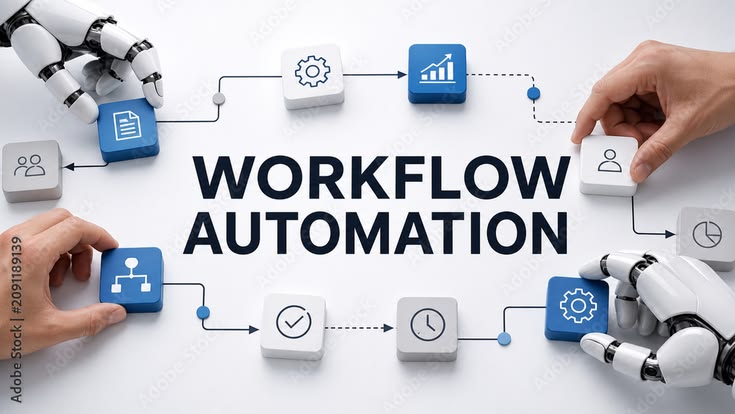
A "WORKFLOW AUTOMATION" concept graphic showing human hands and robotic hands collaborating to assemble a flowchart made of block icons on a white background.
Marketing Automation

Automation Benefits

In today’s digital world, businesses are always looking for better ways to save time, reduce costs, and improve their work. Customers expect quick responses, smooth services, and a good experience whenever they interact with a business. Managing all these things manually can become difficult, especially when a business starts growing. This is where automation becomes useful. Automation helps businesses complete repetitive tasks automatically with the help of software, tools, and technology. Instead of doing the same work again and again, businesses can use automation to handle many tasks with less manual effort. These tasks may include sending emails, following up with customers, managing leads, scheduling social media posts, collecting information, and tracking marketing results. For example, imagine that a customer fills out a contact form on your website. Without automation, you may need to check the form, collect the customer’s details, and send a reply manually. With automation, the customer can receive an instant confirmation email, and their information can be saved directly in your customer management system. This saves time and makes the process easier for both the business and the customer. Automation is not only useful for large companies. Small businesses, startups, freelancers, digital marketers, and online stores can also use it to improve their daily work. In this blog, we will explore the major benefits of automation, how it works, and why it has become an important part of modern business growth. What Is Automation? Automation is the process of using technology or software to perform tasks with little or no manual effort. It allows businesses to create systems that complete specific actions automatically when certain conditions are met. In simple words, automation means letting technology handle repeated work so that people can focus on more important activities. For example, an email marketing tool can automatically send a welcome email whenever someone subscribes to a newsletter. Similarly, a social media scheduling tool can publish a post at a selected time without requiring someone to publish it manually. Automation can be used in many areas, including: Email marketing Digital marketing Customer service Sales and lead management Website management Social media marketing Data collection and reporting Online shopping and order management The main purpose of automation is to make work faster, easier, more consistent, and less dependent on repetitive manual tasks. However, automation does not mean removing people from every process. Human judgment, creativity, communication, and decision-making are still important. The best results often come when people and automation tools work together. Why Is Automation Important for Modern Businesses? Running a business involves many small tasks that require time and attention. Answering customer questions, sending emails, updating records, preparing reports, and following up with leads can take up a large part of the working day. When these activities are handled manually, employees may have less time for planning, creativity, and business development. Automation helps solve this problem by creating a more organized way of working. For example, a digital marketing agency may manage several clients at the same time. Each client may need regular reports, email campaigns, social media updates, and lead follow-ups. Completing every task manually can become difficult as the number of clients increases. With automation, the agency can schedule posts, send selected email sequences, organize leads, and prepare recurring reports more efficiently. This allows the team to spend more time understanding customer needs, improving campaigns, and developing better marketing strategies. Automation is important because it helps businesses handle their workload more effectively while maintaining consistent processes. 1. Saves Time and Improves Productivity One of the biggest benefits of automation is that it saves time. Many business activities are repeated every day. These tasks may not be complicated, but they can take hours when completed manually. Automation allows software to handle suitable repetitive activities in the background. For example, sending a welcome email to every new subscriber can be automated. Instead of writing and sending the same message repeatedly, a business can create the email once and allow the system to send it whenever a new subscriber joins the list. The same approach can be used for appointment reminders, order confirmations, follow-up messages, and scheduled social media posts. Saving time does not only mean finishing tasks faster. It also gives employees more time to focus on activities that require personal attention and creative thinking. When people spend less time on repetitive work, they can concentrate on improving customer relationships, developing new ideas, and solving business problems. As a result, automation can improve overall productivity and make daily work more manageable. 2. Reduces Human Errors Even careful employees can make mistakes, especially when they perform the same task many times. A person may enter the wrong email address, forget to update a customer record, miss a follow-up, or accidentally send an incorrect report. These small mistakes can sometimes create bigger problems for a business. Automation can reduce certain types of human error by following predefined instructions consistently. For example, an automated form can collect customer details in a standard format. A connected system can then transfer those details into a customer database without requiring someone to copy the information manually. Similarly, automated calculations and reporting tools can reduce errors caused by repeated manual data entry, provided the information and rules are correct. However, automation is not perfect. Incorrect settings, poor-quality data, or technical problems can also lead to mistakes. That is why businesses should test their automated systems, review important results, and update processes when necessary. When used carefully, automation helps businesses maintain more accurate records and complete routine tasks with greater consistency. 3. Improves Email Marketing Email marketing is one of the most useful areas for automation because businesses often need to communicate with customers at different stages of their journey. Sending every email manually can be difficult when a business has hundreds or thousands of subscribers. Email automation helps businesses send relevant messages based on customer actions, preferences, or subscription status. For example, when a person subscribes to a newsletter, they can automatically receive a

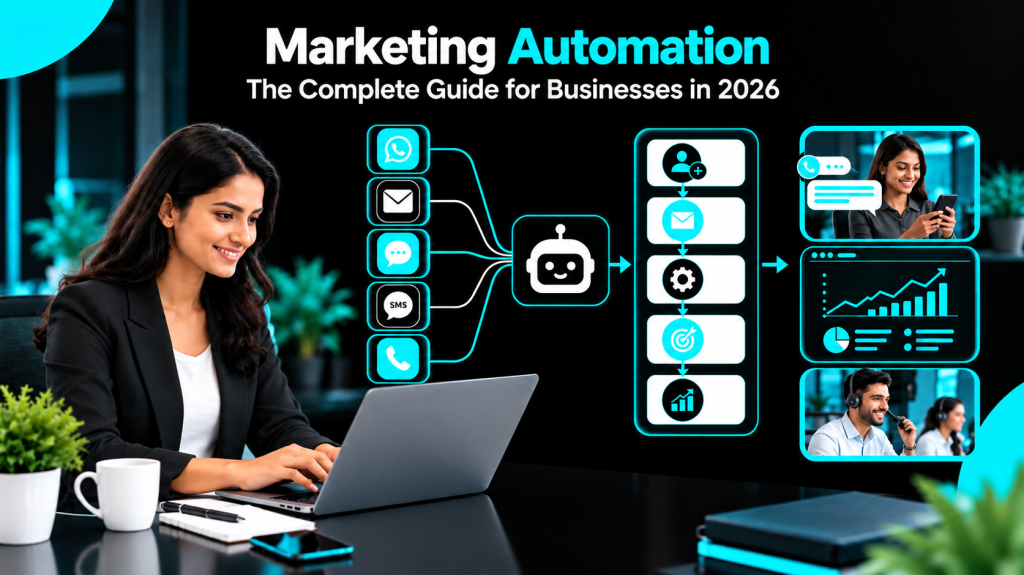
A marketing automation banner featuring a professional woman using a laptop next to a flowchart illustration showing communication channels funneling into a chatbot system.
Marketing Automation

Marketing Automation Basics

In today’s digital world, businesses need more than just good products or services to grow. They also need to communicate with customers, follow up with potential buyers, share useful information, and build long-term relationships. Managing all these activities manually can take a lot of time, especially when a business has hundreds or thousands of customers. This is where marketing automation becomes useful. Marketing automation helps businesses use software and technology to manage repetitive marketing activities automatically. Instead of manually sending every email, following up with every lead, or organizing every customer record, businesses can create workflows that complete these tasks based on specific actions or conditions. For example, imagine someone visits your website and subscribes to your newsletter. You can set up an automated system that sends a welcome email immediately. After a few days, the subscriber may receive a helpful guide related to their interests. Later, they might receive information about your services. All these messages can be sent automatically according to a plan you create in advance. Marketing automation is not only for large companies with big marketing teams. Small businesses, startups, freelancers, online stores, and digital marketing agencies can also use it to improve their marketing efforts. However, marketing automation is not simply about sending more emails or using more software. Its real purpose is to deliver the right information to the right audience at the right time while making marketing activities easier to manage. In this guide, we will explain the basics of marketing automation, how it works, its major benefits, useful tools, common examples, and how beginners can start using it effectively. What Is Marketing Automation? Marketing automation is the use of software and technology to manage repetitive marketing tasks and customer communication with less manual effort. It allows businesses to create workflows that respond to customer actions, preferences, or other predefined conditions. In simple words, marketing automation means setting up a system that handles selected marketing activities automatically instead of requiring someone to complete every step manually. For example, a business may use marketing automation to: Send welcome emails to new subscribers. Follow up with people who submit inquiry forms. Organize customers according to their interests. Share educational content through email sequences. Send reminders to potential customers. Track customer interactions with marketing campaigns. Notify sales teams when a new lead arrives. Measure marketing campaign performance. Suppose you own a digital marketing agency. Someone visits your website and requests information about SEO services. An automated workflow can record their details, send a confirmation email, and notify your team about the inquiry. Your team can then review the lead and contact the person personally when needed. This makes the process more organized and reduces the chance of forgetting important follow-ups. The important thing to understand is that marketing automation supports your marketing strategy. It does not replace the need for valuable content, a good understanding of your audience, or genuine communication. Why Is Marketing Automation Important? Marketing has become more complex because customers interact with businesses through many different channels. A potential customer might discover a business through Google, visit its website, follow its social media page, read a blog post, and eventually contact the business through email. Keeping track of every interaction manually can become difficult. Marketing automation helps businesses organize these activities and maintain communication with their audience. For example, an online store may use automation to welcome new subscribers, share information about products, remind customers about items left in their shopping carts, and request feedback after a purchase. A service-based business may use automation to acknowledge new inquiries, send educational resources, and remind its team to follow up with interested prospects. These systems help businesses maintain consistency even when the number of customers increases. Marketing automation is also important because customers often expect timely and relevant communication. A person who requests information about a service should receive a useful response, not an unrelated promotional email. When businesses use automation thoughtfully, they can create more organized customer journeys and make better use of their marketing resources. How Does Marketing Automation Work? Marketing automation usually works through a combination of triggers, conditions, actions, and workflows. Each part has a specific purpose. 1. Triggers A trigger is an event that starts an automated workflow. For example, a person subscribes to a newsletter, downloads an e-book, fills out a contact form, or registers for a webinar. The system recognizes the selected event and begins the process. 2. Conditions Conditions help determine what should happen next. For example, a business may send different information to subscribers who are interested in SEO and those who are interested in social media marketing. The system checks the available information and follows the appropriate path. 3. Actions An action is the task the system performs. This may include sending an email, updating a customer record, assigning a lead to a sales representative, or creating a follow-up reminder. 4. Workflows A workflow is the complete sequence of steps connected together. For example: A person subscribes to your newsletter, receives a welcome email, gets a useful guide after a few days, and then receives an invitation to explore a relevant service. The workflow follows the rules you have created. Here is a simple example of a marketing automation process: Website visitor → Newsletter signup → Welcome email → Helpful content → Relevant offer → Follow-up This process helps a business maintain communication without manually sending every message. However, each workflow should be tested before it goes live. Incorrect conditions or outdated information can cause the system to send the wrong messages. 1. Saves Time One of the biggest benefits of marketing automation is saving time. Marketing teams often repeat the same activities every day, such as sending emails, updating customer records, scheduling follow-ups, and organizing leads. Automation allows businesses to create a process once and reuse it whenever the appropriate conditions are met. For example, a welcome email can be written and configured once. Every eligible new subscriber can then receive it automatically.

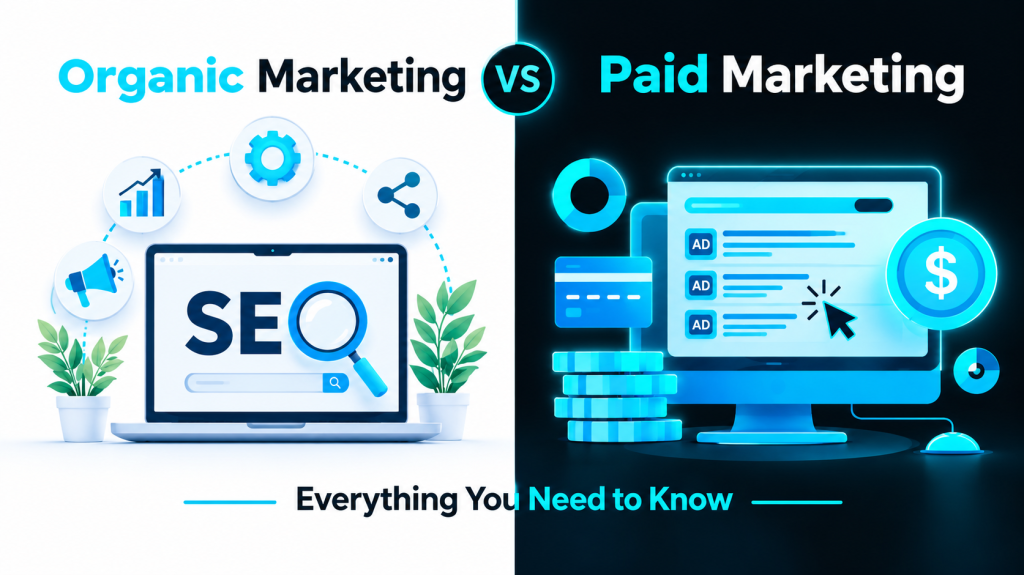
A split-screen graphic comparing "Organic Marketing" featuring an SEO laptop on a white background versus "Paid Marketing" featuring an ad campaign monitor on a black background.
Paid vs Organic Marketing

Paid + Organic Strategy

Growing a business online is not as simple as posting on social media, running an advertisement, or publishing a few blog posts and waiting for customers to arrive. There are many ways people can discover a business today. They might find you through Google, see your Instagram post, click an advertisement, watch your video, read your blog, hear about you from someone else, or come back after seeing your brand several times. That is why relying on just one marketing channel can make growth difficult. Paid marketing can help you reach people quickly, while organic marketing can help you build visibility and trust over time. When these two approaches are planned together, they can create a much stronger digital marketing strategy. This is what a Paid + Organic Strategy is all about. Instead of asking, “Should I invest in paid marketing or organic marketing?”, businesses can start asking a better question: “How can paid and organic marketing work together to grow my business?” The answer depends on your audience, goals, budget, industry, and customer journey. But when the two strategies complement each other, they can help businesses generate short-term opportunities while building long-term digital growth. Let’s understand how it works. What Is a Paid + Organic Strategy? A Paid + Organic Strategy means using both paid advertising and organic marketing as part of one connected digital marketing plan. Paid marketing includes things like: Google Ads Social media advertising YouTube Ads Display advertising Shopping Ads Remarketing campaigns Paid promotional campaigns Organic marketing includes: SEO Blog content Organic social media Educational videos Website content Email marketing Online community building Brand awareness activities These strategies work differently. Paid marketing gives you the ability to put your business in front of a targeted audience without waiting for organic visibility to develop. Organic marketing focuses on building visibility naturally through valuable content, search rankings, social engagement, authority, and trust. One gives you speed. The other builds momentum. And when they work together, your marketing doesn’t have to depend entirely on one source of traffic. Why Use Paid and Organic Marketing Together? Imagine that you have just launched a new service. You want people to know about it immediately, so you run Google and social media advertisements. That’s your paid strategy. At the same time, you publish helpful blog posts related to the problems your service solves. You optimize your service pages for search engines and regularly share useful content on social media. That’s your organic strategy. Now something interesting happens. Someone sees your advertisement but doesn’t contact you. A few days later, they search for the problem your service solves and find your blog. They read your article. Then they visit your service page. They see your social media content. Eventually, they decide to contact you. Which channel generated the customer? Was it the advertisement? Was it SEO? Was it your content? Was it social media? In reality, it may have been all of them working together. Customers rarely follow a perfectly straight path. They need multiple interactions before they feel comfortable choosing a business. That’s one of the biggest reasons a combined strategy can be so powerful. Paid Marketing Gives You Speed One of the strongest advantages of paid marketing is that it can help you get visibility quickly. Suppose you have a new product and want people to know about it this week. If you rely only on SEO, you may have to wait for your content and pages to gain visibility. With paid advertising, you can create a campaign and start reaching your selected audience once the ads are approved and running. This makes paid marketing useful for: New product launches Special offers Seasonal promotions Events Lead generation New services Local business promotions E-commerce campaigns Paid advertising is particularly useful when timing matters. For example, if you’re running a limited-time sale for ten days, waiting several months for organic traffic to grow doesn’t make much sense. Paid advertising can help you get your message in front of potential customers while the offer is still active. But speed comes with a cost. Once you stop paying for advertisements, the paid traffic associated with those campaigns can decrease significantly. That’s where organic marketing becomes important. Organic Marketing Builds Long-Term Visibility Organic marketing takes a different approach. Instead of paying every time someone sees or clicks your advertisement, you create useful assets that can attract people naturally. SEO is a good example. Suppose you publish a detailed article answering an important question your customers regularly search for. You optimize it properly and continue improving it over time. If that article eventually ranks well, people can discover your business through it without you paying for every individual visit. The same principle applies to other forms of organic content. A useful video can continue getting views. A helpful social media post can continue being shared. A well-written service page can attract search traffic. A strong brand reputation can generate referrals. Organic marketing can therefore create something valuable: marketing assets that can continue working after the initial effort. However, organic growth doesn’t happen overnight. It requires patience, consistency, quality, and continuous improvement. That’s why it works particularly well alongside paid marketing. Paid Gets Attention. Organic Builds Trust This is one of the easiest ways to understand the relationship. Paid marketing can help someone discover your business. Organic marketing can help them understand and trust your business. Imagine someone sees your Google advertisement for SEO services. They click the advertisement and visit your website. The service page explains what you offer. But before contacting you, they want to know whether you actually understand SEO. They find your blog. They read your articles about technical SEO, on-page SEO, local SEO, and content strategy. Then they check your social media. Now they have more reasons to trust you. The advertisement started the journey. Your organic content helped continue it. This is how paid and organic strategies can support each other. The Customer Journey Is More Important Than the Channel Many

A glowing cyan graphic for "PPC" advertising featuring a central monitor with a Rupee sign, surrounded by marketing icons and two professionals.
Paid vs Organic Marketing

When Should a Business Use Paid Marketing?

Every business wants more customers. But getting those customers is not always easy. You may have a good product, a professional website, an active social media account, and a strong service—but if the right people aren’t seeing your business, growth can still feel slow. This is where paid marketing can make a big difference. Paid marketing allows businesses to put their products, services, offers, and brand in front of a selected audience through platforms such as Google, Facebook, Instagram, YouTube, LinkedIn, and other advertising networks. But there’s an important question that many business owners don’t ask: “When should I actually use paid marketing?” Just because paid advertising is available doesn’t mean you should immediately start spending money. Running ads before your business is ready can waste your budget. On the other hand, waiting too long can mean missing valuable opportunities. The right time depends on your business goals, audience, website, offer, budget, competition, and how quickly you want to grow. In this guide, we’ll look at the situations where paid marketing makes the most sense, when you should be cautious, and how to know whether your business is ready to invest in paid advertising. What Is Paid Marketing? Paid marketing is a form of advertising where businesses pay digital platforms to promote their products, services, content, or brand. You’ve probably interacted with paid marketing today without realizing it. You search for something on Google and see sponsored results. You scroll through Instagram and see a product advertisement. You watch a YouTube video and an ad appears before the video. You visit a website and see a display advertisement for a product you recently viewed. All of these are examples of paid digital marketing. Some common paid marketing channels include: Google Search Ads Google Display Ads Google Shopping Ads YouTube Ads Facebook Ads Instagram Ads LinkedIn Ads Remarketing campaigns Video advertising Paid social media campaigns The main idea is simple. Instead of waiting for customers to discover your business naturally, you pay to place your business in front of people who may be interested in what you offer. But successful paid marketing isn’t simply about putting money behind an advertisement. It requires a clear strategy. Why Timing Matters in Paid Marketing Imagine you own a restaurant. You create a Google advertisement saying: “Order Your Dinner Online Today.” Someone clicks the advertisement. But when they reach your website, they can’t find the menu. The website is slow. The ordering process is confusing. There is no clear contact information. The customer leaves. You paid for that click, but the business wasn’t ready to convert it. This is why the timing of paid marketing matters. An advertisement can bring people to your business, but it cannot automatically fix everything that happens after the click. Before investing heavily in paid marketing, you should make sure your website, offer, customer journey, and conversion process are ready. Once those basics are in place, paid advertising can become a much more useful growth tool. 1. Use Paid Marketing When You Need Faster Results One of the clearest reasons to use paid marketing is when you need visibility quickly. Organic marketing can be powerful, but it takes time. SEO requires research, content creation, technical improvements, authority building, and continuous optimization. Social media growth also takes consistency. Paid advertising works differently. Once your campaign is approved and running, your advertisements can begin reaching your selected audience. This makes paid marketing useful when you have an immediate goal. For example: You launched a new service. You have a limited-time offer. You are promoting an event. You opened a new location. You launched a new product. You need more enquiries this month. If your business needs attention now, paid marketing can help you get in front of potential customers much faster than waiting for organic visibility to grow. 2. Use Paid Marketing When You’re Launching a New Product Launching a new product is exciting. But launching a product doesn’t automatically mean people will buy it. People first need to know that the product exists. This is where paid advertising can help. You can introduce your new product to a carefully selected audience and quickly generate awareness. For example, imagine an online clothing brand launching a new collection. Instead of waiting for followers to discover the collection, the business can use paid social media advertising to show the new products to relevant audiences. The campaign can focus on: Product awareness Website visits Product views Sales Remarketing Paid advertising can give a new product the initial push it needs. At the same time, organic content can support the launch through posts, videos, blogs, and other content. This combination can make a product launch much stronger. 3. Use Paid Marketing When You Have a Strong Offer Paid advertising works best when you have something worth promoting. That could be: A useful service A competitive product A special discount A limited-time offer A free consultation A free trial A seasonal deal A valuable downloadable resource Think about it from the customer’s point of view. Why should they click your advertisement? If your advertisement simply says: “We provide digital marketing services.” there may be little reason for someone to act. But if the message clearly communicates a relevant benefit or solves a problem, it becomes more compelling. For example: “Need More Qualified Leads? Build a Smarter Digital Marketing Strategy.” The second message gives the customer a reason to pay attention. So before running paid campaigns, make sure you can answer one important question: What am I giving people a reason to choose? 4. Use Paid Marketing When You Know Your Target Audience One of the biggest advantages of paid advertising is targeting. But targeting only works well when you understand your audience. You should have a reasonable idea of: Who your customers are Where they are located What they need What problems they face What they search for What influences their decisions What they are willing to pay Where they spend time online For example, a

A glowing cyan financial comparison graphic featuring cash flow icons on the left versus a safe and asset boxes on the right, separated by a central "VS" sign.
Paid vs Organic Marketing

Cost vs Growth

Every business wants to grow, but growth rarely happens without spending something. You may spend money on advertising, content, SEO, social media, website development, email marketing, or other digital marketing activities. And whenever money goes out of the business, one question naturally comes up: “Is this actually worth the cost?” It is a fair question. Marketing should not be about spending money simply because every other business is running ads. It should be about understanding what you are spending, what you are getting in return, and whether that spending is helping your business move forward. This is where the difference between cost and growth becomes important. A cost is simply money you spend. Growth is what that spending helps you create. The real goal of digital marketing is not to find the cheapest way to promote your business. It is to find a marketing approach where your investment has a realistic opportunity to generate more customers, more revenue, stronger visibility, and long-term business value. In other words, the question should not always be: “How much will marketing cost me?” A better question is: “What can this investment help my business achieve?” What Does Cost vs Growth Actually Mean? When business owners hear the word “cost,” they usually think about money leaving their bank account. For example, you might spend ₹20,000 on Google Ads, ₹15,000 on social media marketing, or ₹25,000 on SEO and content. At first glance, these numbers look like expenses. But the story changes when you connect that spending with results. Suppose you spend ₹20,000 on advertising and generate ₹80,000 in sales. The ₹20,000 was not simply a cost. It helped create ₹80,000 in revenue. Of course, real marketing is rarely this simple. Some campaigns may perform well, while others may need improvement. Some customers may buy immediately, while others may take weeks or months before making a decision. That is why smart marketing looks beyond the amount spent. It looks at what the investment produces. Why Businesses Often Focus Too Much on Cost One of the most common marketing mistakes is choosing the cheapest option without considering the result. A business might choose a low-cost service because it saves money today. But if that marketing does not bring quality traffic, leads, sales, or brand visibility, the business may actually lose more money in the long run. Think about it. You can spend less on marketing and get very little. Or you can spend more strategically and create a system that consistently brings customers. The cheapest option is not always the most affordable option. Sometimes, the expensive mistake is paying for marketing that does not work. This is why businesses need to look at marketing from a growth perspective rather than simply a cost perspective. Marketing Is an Investment When It Produces Business Value Not every marketing expense automatically becomes an investment. It becomes an investment when you can connect it to meaningful business outcomes. For example: More qualified website visitors More enquiries More phone calls More product purchases More bookings More returning customers Better brand awareness Higher search visibility Stronger customer relationships These results create value for the business. That does not mean every campaign will immediately make money. Marketing often requires testing, learning, improving, and giving customers enough time to respond. But there should always be a clear reason behind the investment. You should know what you are trying to achieve and how you will measure progress. The Real Question: What Are You Getting for Your Money? Instead of asking only, “How much does marketing cost?” ask: “What am I getting for that cost?” Imagine two businesses. Business A spends ₹10,000 every month on marketing but does not track where leads come from. Business B spends ₹25,000 every month but tracks traffic, leads, conversions, customer acquisition cost, and revenue. Business A spends less. But Business B may be getting significantly better results. This is why the amount spent alone does not tell you whether marketing is good or bad. You need context. A ₹50,000 marketing investment that generates ₹2 lakh in profitable business may be more valuable than a ₹10,000 investment that generates almost nothing. Cost Per Lead Is More Important Than Total Spending For businesses focused on enquiries, one useful metric is Cost Per Lead (CPL). Imagine you spend ₹30,000 on a campaign and receive 100 leads. Your average cost per lead is: ₹30,000 ÷ 100 = ₹300 per lead Now imagine another campaign costs ₹20,000 and generates only 30 leads. Its cost per lead is around: ₹667 per lead The second campaign costs less overall, but each lead is costing more. This is a simple example of why looking only at the marketing bill can be misleading. But even CPL is not the final answer. The quality of those leads matters too. Cheap Leads Are Not Always Good Leads Suppose Campaign A generates 200 leads at ₹100 each. Campaign B generates 50 leads at ₹400 each. At first, Campaign A looks like the winner. But imagine only 5 of Campaign A’s leads become customers, while 20 of Campaign B’s leads become customers. Suddenly, the picture changes. Campaign B is producing fewer leads, but they are much more valuable. This is why businesses should not chase numbers without understanding quality. A marketing campaign should attract the right people, not simply more people. More traffic is not always better. More leads are not always better. More followers are not always better. The real goal is more valuable business outcomes. Customer Acquisition Cost Matters Another important metric is Customer Acquisition Cost (CAC). CAC tells you approximately how much you spend to acquire one paying customer. For example, if you spend ₹50,000 on marketing and sales and acquire 25 customers: ₹50,000 ÷ 25 = ₹2,000 CAC Now you can compare that cost with the value of the customer. If an average customer generates ₹10,000 in profitable revenue over time, spending ₹2,000 to acquire that customer may make sense. But if the customer only generates ₹1,500, the numbers

A glowing cyan graphic comparing "ORGANIC" and "PAID" social media marketing with post mockups and data charts on a black background.
Paid vs Organic Marketing

Paid or Organic: Where Should You Invest?

If you are trying to grow your business online, you have probably faced this question at some point: Should I invest in paid marketing, or should I focus on organic growth? It’s a fair question. You have a limited marketing budget, limited time, and a business that needs real results. So naturally, you want to know where your money and effort will have the biggest impact. Paid marketing can put your business in front of potential customers quickly. Organic marketing can help you build visibility, trust, and long-term traffic without paying for every click. So, which one is better? The truth is that there is no single answer. For some businesses, paid advertising can be the fastest way to generate leads and sales. For others, organic marketing may be the better long-term investment. And for many businesses, the smartest strategy is to use both. The important thing is understanding what each approach does, when it works best, and how it fits into your business goals. Let’s break it down in simple terms. What Is Paid Marketing? Paid marketing is exactly what it sounds like—you pay a platform to promote your business. You’ve probably seen paid advertisements every day. You search for something on Google and see sponsored results at the top. You scroll through Instagram and come across a product you weren’t actively looking for. You watch a YouTube video and see an advertisement before the video starts. These are all forms of paid marketing. Businesses can use platforms such as Google Ads, Meta Ads, YouTube Ads, LinkedIn Ads, and other advertising networks to reach specific audiences. The biggest advantage is control. You can decide how much you want to spend, who you want to target, where your ads should appear, and what action you want people to take. If your goal is to generate leads quickly or promote a limited-time offer, paid marketing can be extremely useful. But there is one important thing to remember. Paid traffic usually stops when you stop paying. That’s why paid marketing can provide speed, but it doesn’t necessarily build long-term visibility on its own. What Is Organic Marketing? Organic marketing is about attracting people without directly paying for every visit, click, or interaction. It includes strategies such as: SEO Blog content Organic social media Educational videos Helpful guides Email content Online communities Brand building Word-of-mouth marketing For example, if someone searches Google for a question and finds your blog article in the organic search results, that’s organic traffic. If someone discovers your Instagram page because your content was shared by another person, that’s organic reach. If a customer recommends your business to a friend, that’s also organic growth. Organic marketing usually takes more time. You need to consistently create useful content, improve your website, build authority, and give people a reason to trust your brand. But the benefit is that the work you do today can continue bringing results later. A useful blog post can bring search traffic months after you publish it. A strong social media post can continue getting shared. A well-optimized website page can keep attracting potential customers. That’s the long-term power of organic marketing. Paid vs Organic: The Basic Difference The simplest way to understand the difference is this: Paid marketing buys visibility. Organic marketing earns visibility. With paid marketing, you are paying for access to an audience. With organic marketing, you are building something valuable enough for people to discover, engage with, and share. Paid marketing can be faster. Organic marketing can be more sustainable. Paid marketing gives you immediate control. Organic marketing can create long-term assets. Neither is automatically better. The right choice depends on what your business needs right now. Why Businesses Choose Paid Marketing Imagine you have just launched a new business. Your website is ready. Your product is ready. Your sales team is ready. But hardly anyone knows you exist. Waiting for organic traffic to grow can take time. This is where paid advertising can help. You can create a campaign, define your audience, set a budget, and start reaching potential customers much faster. This makes paid marketing particularly useful when you need immediate visibility. For example, paid advertising can work well for: New product launches Seasonal offers Limited-time discounts Lead generation Event promotion Local business promotions E-commerce sales New service launches If you have a clear offer and a defined audience, paid marketing can help you get that offer in front of people quickly. The Biggest Benefits of Paid Marketing Faster Results The biggest advantage is speed. You don’t have to wait months to see whether people are interested in your offer. Once your campaign is properly set up and approved, your ads can start reaching your target audience. This doesn’t mean every campaign will be profitable immediately. You still need the right targeting, creative, offer, landing page, and strategy. But compared with many organic strategies, paid advertising can produce visibility much faster. Precise Targeting Paid platforms allow businesses to target audiences using various available signals. You can often target based on factors such as location, interests, demographics, search intent, previous interactions, and other platform-specific criteria. This means you don’t necessarily have to advertise to everyone. You can focus on the people most likely to need your product or service. Easy to Measure Paid advertising gives you plenty of performance data. You can see impressions, clicks, conversions, costs, and other campaign metrics. This makes it easier to understand what is working and what isn’t. Flexible Budget You can start with a controlled budget and adjust it based on performance. You can increase spending on campaigns that perform well and reduce spending on campaigns that don’t. Useful for Testing Paid campaigns can help you test different headlines, offers, audiences, images, videos, and messages. This can give you valuable insights into what your customers respond to. But Paid Marketing Has a Downside Paid marketing sounds great—and it can be—but it isn’t magic. One of the biggest disadvantages is cost. Every click, impression, or conversion

A circle of glowing cyan podiums displaying popular social media icons around the text "PAID ADVERTISING" on a black background.
Paid vs Organic Marketing

Paid Marketing Benefits

In today’s digital world, simply having a website or social media account is not enough to grow a business. There are millions of brands competing for the same audience, and getting noticed organically can take time. This is where paid marketing becomes a powerful growth strategy. Paid marketing helps businesses put their products, services, and offers in front of the right people at the right time. Instead of waiting for customers to discover your brand naturally, you can use paid advertising to actively reach potential customers who are already interested in what you offer. From Google Ads and social media advertising to display campaigns, shopping ads, and video promotions, paid marketing gives businesses more control over their online visibility. But paid marketing is not simply about spending money on advertisements. When planned correctly, it can help businesses generate traffic, build brand awareness, attract qualified leads, increase sales, and achieve measurable business growth. In this blog, let’s explore the major benefits of paid marketing and understand why it has become an important part of modern digital marketing strategies. What Is Paid Marketing? Paid marketing is a type of digital marketing where a business pays an advertising platform to show its products, services, offers, or content to a selected audience. You have probably seen paid advertisements many times without even thinking about them. You search Google for a service and see sponsored results at the top. You are scrolling through Instagram and see a product that matches your interests. You watch a YouTube video and an advertisement appears before it starts. These are all examples of paid marketing. Businesses can advertise through platforms such as Google, YouTube, Facebook, Instagram, LinkedIn, and other advertising networks. The biggest difference between paid and organic marketing is simple. With organic marketing, you work to earn attention. With paid marketing, you pay to get targeted attention. Neither approach is necessarily better on its own. In fact, businesses often get stronger results when they use both together. Why Do Businesses Need Paid Marketing? Think about how many businesses are competing for attention online. If you search for a popular product or service, you may find hundreds of websites, social media pages, videos, and advertisements competing for the same customer. Even if your business offers something better, customers may never see it. That is the problem paid marketing can help solve. Paid advertising gives your business a chance to appear where your potential customers are already spending their time. For example, if someone is searching for a service that your company provides, you can use search advertising to put your business in front of them at that exact moment. If someone has already visited your website but didn’t make a purchase, you may be able to reach them again through remarketing. And if you are launching a new product, paid social media or video advertising can help introduce it to a much larger audience. The idea is simple: Don’t wait for customers to find you. Go where your customers already are. 1. Paid Marketing Can Bring Faster Visibility One of the biggest reasons businesses choose paid marketing is speed. Organic marketing takes time. SEO, for example, can be extremely valuable, but getting a new website or page to rank well in search results doesn’t usually happen overnight. Paid advertising works differently. Once your campaign is properly set up, approved, and running, your advertisement can start appearing in front of your selected audience. This can be especially helpful when you have something that needs attention quickly. Maybe you’re launching a new product. Maybe you have a limited-time offer. Maybe you’re opening a new business. Maybe you simply need more enquiries this month. Instead of waiting for organic traffic to build, paid advertising can help you start reaching potential customers much sooner. Of course, faster visibility doesn’t automatically mean better results. Your targeting, advertisement, offer, landing page, and overall strategy still matter. But when time is important, paid marketing gives businesses a useful advantage. 2. You Can Reach the People Who Actually Matter Getting your advertisement in front of a million people sounds impressive. But what if none of them are interested in your product? That’s where targeted advertising becomes powerful. Paid advertising allows you to decide who you want to reach based on different factors. Depending on the platform, you can target people based on things such as their location, interests, demographics, search behavior, online activity, and previous interaction with your business. Let’s say you own a local fitness studio. You don’t necessarily need your advertisement to reach people across the entire country. You may want to reach people who live within a certain distance of your studio. Or imagine you sell premium business software. Showing your advertisement to people who are actively looking for business solutions can make much more sense than showing it to a completely random audience. This level of targeting helps businesses spend their advertising budget more intelligently. The goal isn’t simply to reach more people. It’s to reach more of the right people. 3. It Can Bring More Traffic to Your Website Your website is often where interested people learn more about your business. They may read about your services, look at your products, check your reviews, compare your prices, or contact your team. But a great website doesn’t help much if nobody visits it. Paid marketing can help bring targeted visitors to your website. For example, you can create an advertisement around a particular service and send users directly to the relevant service page. An online store can send potential customers straight to a product page. A consultant can send visitors to a consultation booking page. The important part is relevance. If someone clicks an advertisement for “SEO services,” they should ideally land on a page that clearly talks about your SEO service. When the advertisement and landing page make sense together, the visitor has a much clearer path forward. 4. Paid Marketing Can Help Generate Leads For many businesses, the main goal

Scroll to Top