
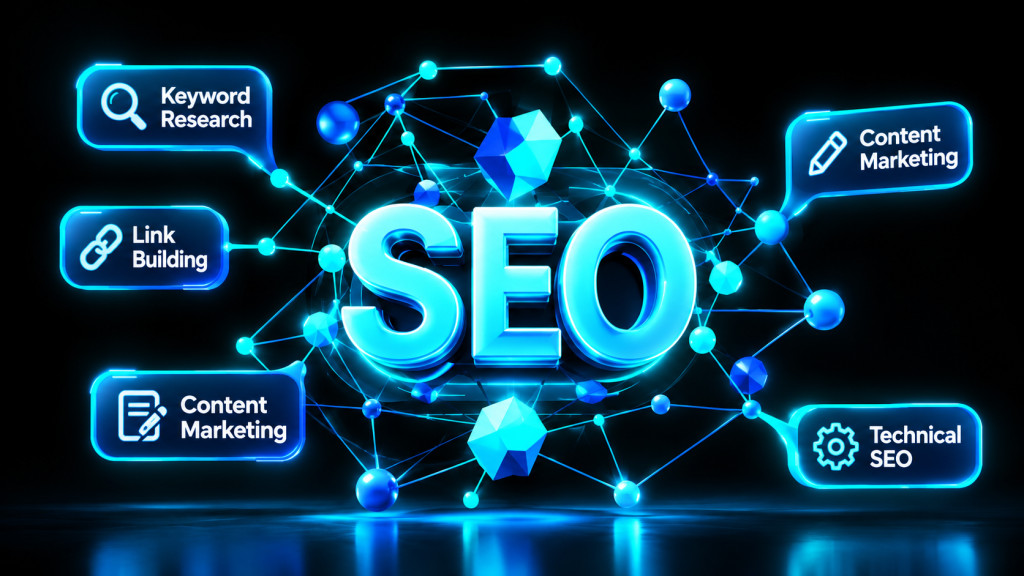
If you have a website for your business, getting people to visit it is just as important as having a great website. But how do people actually find your website when they search for products, services, or information on Google?
SEO is the process of improving your website so that search engines can understand your content and show your pages to people searching for relevant information. A well-planned SEO strategy can help your website gain more visibility, attract the right audience, build trust, and generate potential customers over time.
Whether you run a small local business, an online store, a startup, or a growing company, understanding SEO can help you build a stronger online presence.
In this guide, we will explain what SEO is, how it works, why it matters, the different types of SEO, common mistakes, and simple SEO practices you can start using today.
What Is SEO?
SEO stands for Search Engine Optimization.
In simple words, SEO means making your website easier for search engines and people to understand.
When someone searches for something on Google, the search engine looks through billions of web pages to find the information that is most relevant to the search.
For example, imagine you own a digital marketing agency in India. Someone searches:
“digital marketing agency for small businesses”
If your website has useful content related to that search, is technically well-structured, provides a good user experience, and follows SEO best practices, your pages may have an opportunity to appear in search results.
SEO is not about simply adding keywords to a page. Modern SEO involves many different factors, including content quality, website structure, page experience, relevance, technical performance, links, and user intent.
Why Is SEO Important for Your Business?
Today, people often use search engines before making a purchase, contacting a company, or choosing a service.
Think about your own search behavior. When you need a service, you may search for:
- “SEO company near me”
- “best website developer”
- “social media marketing services”
- “Google Ads agency”
- “digital marketing services for startups”
Businesses that appear in relevant search results have an opportunity to introduce themselves to potential customers.
1. SEO Improves Online Visibility
A beautiful website is not enough if your target audience cannot find it.
SEO helps improve your website’s visibility for searches related to your products, services, and industry.
The more relevant searches your website can appear for, the more opportunities you have to reach potential visitors.
2. SEO Can Bring Relevant Traffic
Not all website traffic is equally valuable.
SEO focuses on attracting people who are actively searching for information, products, or services related to your business.
For example, someone searching for “SEO services for small businesses” may have a stronger connection to an SEO agency than someone who randomly visits a marketing website.
3. SEO Helps Build Trust
People often associate search visibility with credibility, although appearing in search results does not automatically mean a business is trustworthy.
Useful content, clear information, positive user experience, transparent business details, and a professional website can all contribute to building trust with visitors.
4. SEO Supports Long-Term Growth
Paid advertising can bring traffic while campaigns are running. SEO works differently.
When you consistently create useful content and improve your website, your pages can continue attracting organic visitors over time.
SEO therefore works best as a long-term strategy rather than a quick shortcut.
How Does SEO Work?
Search engines use automated systems to discover, understand, and organize web pages.
A simplified SEO process looks like this:
Crawling → Understanding → Indexing → Ranking → Search Results
Crawling
Search engines use automated programs, often called crawlers or bots, to discover pages across the web.
They can follow links from one page to another and discover new or updated content.
Indexing
After discovering a page, a search engine may analyze and store information about it in its index.
The search engine tries to understand what the page is about and how it relates to different searches.
Ranking
When someone performs a search, the search engine determines which indexed pages are relevant to that query and orders the results using many different signals.
This is why SEO requires more than simply inserting keywords into a page.
1. On-Page SEO
On-Page SEO focuses on the content and elements found directly on your website.
Important areas include:
- Page titles
- Headings
- Keywords
- Content quality
- Meta descriptions
- Internal links
- Image alt text
- URLs
- Search intent
- Content structure
For example, if you are writing an article about SEO for beginners, your content should clearly explain SEO instead of repeatedly using the phrase “SEO for beginners” throughout every paragraph.
The goal is to create content that is useful for the reader while making the topic clear to search engines.
2. Off-Page SEO
Off-Page SEO involves activities outside your website that can contribute to your website’s visibility and authority.
One important part is link building.
When relevant and trustworthy websites link to your content, those links can provide useful signals and referral traffic.
Other off-page activities may include:
- Digital PR
- Brand mentions
- Relevant backlinks
- Business listings
- Content promotion
- Relationship building
However, quality matters more than simply collecting a large number of links.
3. Technical SEO
Technical SEO focuses on the technical foundation of your website.
Some important areas include:
- Website speed
- Mobile usability
- Crawlability
- Indexability
- Site architecture
- XML sitemaps
- HTTPS
- Structured data
- Broken links
- Canonicalization
A technically strong website makes it easier for search engines to access and understand your content.
What Are Keywords in SEO?
Keywords are words or phrases that people use when searching online.
For example:
“digital marketing services”
could be a keyword related to a digital marketing agency.
Keyword research helps businesses understand what their target audience is searching for.
But good keyword research goes beyond finding popular phrases.
You should consider:
Relevance + Search Intent + Competition + Business Value
A keyword may have thousands of searches but bring little value to your business. Another keyword may have fewer searches but attract people who are much closer to becoming customers.
This is why choosing the right keywords is more important than simply choosing keywords with the highest search volume.
SEO-Friendly Content: What Does It Mean?
SEO-friendly content is content created for both people and search engines.
Good SEO content should be:
- Useful
- Original
- Easy to understand
- Well organized
- Relevant to the audience
- Naturally written
- Based on search intent
- Easy to read on different devices
Instead of writing content only to rank, focus on solving a real problem.
For example, instead of creating a page filled with the keyword “digital marketing agency,” explain what your agency does, who you help, what problems you solve, and what makes your approach different.
Useful content creates value first. SEO supports that value.
Common SEO Mistakes to Avoid
SEO mistakes can make it harder for your website to perform well.
Here are some common mistakes businesses should avoid.
How Long Does SEO Take?
One of the most common questions businesses ask is:
“How long will SEO take to work?”
There is no universal timeline.
Some websites may see improvements relatively quickly, while competitive industries and new websites may require considerably more time.
Results can depend on:
- Website age and history
- Competition
- Technical issues
- Content quality
- Existing authority
- Keyword difficulty
- Search demand
- SEO strategy
- Consistency
Instead of focusing only on rankings, businesses should also monitor meaningful metrics such as organic traffic, qualified leads, conversions, engagement, and visibility for relevant searches.
SEO and Google Ads: Are They the Same?
No.
SEO focuses on earning organic visibility in search results.
Google Ads uses paid advertising to place ads in eligible search and other Google properties.
Both can be useful parts of a broader digital marketing strategy, but they work differently.
SEO can support long-term organic visibility, while paid search can provide opportunities to reach audiences through advertising campaigns.
For many businesses, the right approach depends on their goals, budget, competition, timeline, and audience.
Why Choose GrowOrbital for SEO?
At GrowOrbital, we believe SEO should be about more than chasing rankings.
Our approach focuses on understanding your business, audience, competition, and online goals before building a strategy.
From keyword research and on-page optimization to technical improvements, content strategy, local SEO, and performance tracking, every part of SEO should have a clear purpose.
We focus on creating a stronger digital foundation that helps your business become easier to discover and easier to understand online.
Our goal is simple:
Turn your online presence into meaningful opportunities for growth.
Whether you are launching a new website or looking to improve an existing one, a thoughtful SEO strategy can help you build visibility step by step.
Final Thoughts
SEO may sound technical at first, but the basic idea is simple:
Help search engines understand your website and help people find useful answers, products, or services.
Successful SEO is not about tricking Google or filling pages with keywords. It is about creating a website that is relevant, useful, accessible, technically sound, and valuable to your audience.
Start with the fundamentals. Understand your customers. Research what they search for. Create genuinely useful content. Improve your website experience. Monitor your results. Then keep learning and improving.
With consistency and the right strategy, SEO can become an important part of your digital marketing journey.
Ready to grow your online visibility?
Let GrowOrbital help you build an SEO strategy designed around your business goals, audience, and long-term growth.
Grow Smarter. Rank Better. Go Beyond.
Conclusion
SEO, or Search Engine Optimization, is the process of improving your website so people can find it more easily through unpaid search results.
It includes many activities, such as keyword research, content creation, On-Page SEO, Off-Page SEO, Technical SEO, and Local SEO.
For beginners, SEO may seem complicated, but you can start with simple steps: understand your audience, create helpful content, optimize your website, fix technical problems, and monitor your performance.
Remember, successful SEO is not about tricking search engines or repeating keywords. It is about making your website useful for people and easier for search engines to understand.
At GrowOrbital, we believe that a strong online presence starts with the right digital marketing strategy. With consistent SEO efforts and a focus on quality, your business can build better search visibility and create more opportunities for growth.
Frequently Asked Questions (FAQs)
1. What is SEO in simple words?
SEO stands for Search Engine Optimization. It is the process of improving a website so it can appear more prominently in unpaid search engine results and attract relevant visitors.
2. Why is SEO important?
SEO helps people discover your website when they search for information, products, or services related to your business. It can increase organic visibility, attract relevant visitors, and support long-term growth.
3. What are the four main types of SEO?
The four commonly discussed types are On-Page SEO, Off-Page SEO, Technical SEO, and Local SEO. Each focuses on a different area of website optimization.
4. Is SEO free?
Organic search clicks do not have a direct per-click advertising cost. However, SEO requires time and effort, and businesses may spend money on content creation, professional services, tools, and website improvements.
5. How long does SEO take to work?
SEO does not have a fixed timeline. Some changes may be noticed quickly, but meaningful improvements in visibility and organic traffic often take several months.
6. Can I do SEO myself?
Yes. Beginners can learn SEO and work on their own websites. Start with keyword research, helpful content, basic On-Page SEO, Google Search Console, and regular website improvements.
7. What is the difference between SEO and Google Ads?
SEO focuses on improving unpaid search visibility, while Google Ads allows businesses to pay for advertising placements. SEO can support long-term organic traffic, while paid ads can provide quicker campaign visibility.
8. What is a keyword in SEO?
A keyword is a word or phrase people enter into search engines to find information, products, or services. SEO professionals use keyword research to understand what their target audience searches for.
9. What is organic traffic?
Organic traffic refers to visitors who reach a website through unpaid search engine results rather than paid advertisements.
10. Is SEO useful for small businesses?
Yes. SEO can help small businesses reach relevant audiences, improve online visibility, and attract potential customers searching for their products or services.