
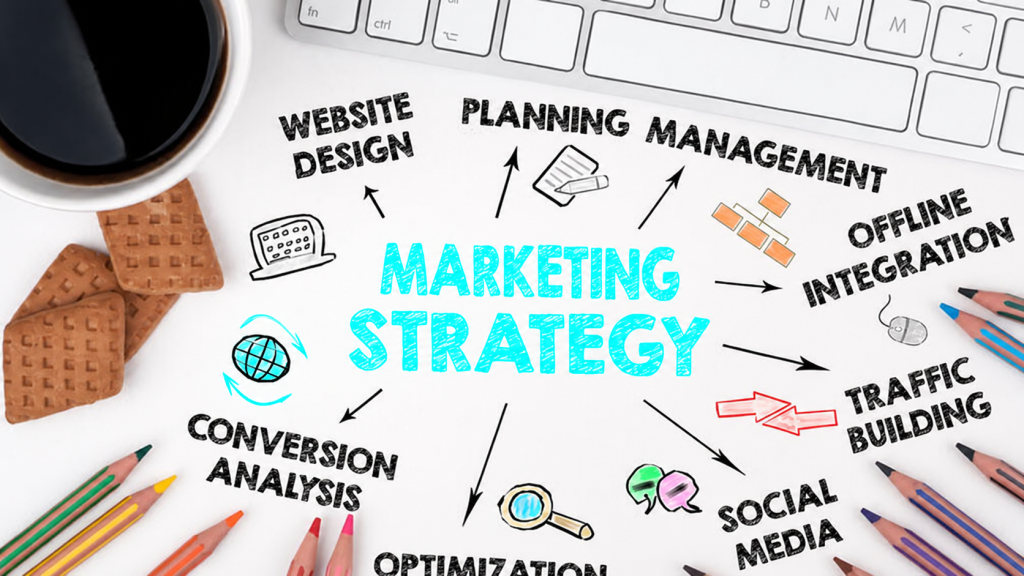
Growing a business today is not just about offering good products or services. It is also about reaching the right audience, building trust, creating meaningful connections, and giving people a reason to choose your brand over others. With so many businesses competing for attention online, having a clear marketing strategy has become more important than ever.
Many businesses spend money on advertisements, social media posts, website development, and other promotional activities without knowing whether their efforts are bringing real results. They may receive likes and website visits, but those numbers do not always turn into leads, sales, or long-term customers.
This is where smart marketing strategies make a difference.
Smart marketing is about understanding your audience, setting clear goals, choosing the right platforms, and using your budget where it can create the most value. Instead of trying every available marketing method, businesses can focus on the activities that match their objectives and deliver measurable results.
Whether you run a small business, an online store, a startup, or an established company, the right approach can help you improve visibility, attract potential customers, and build a stronger online presence.
At GrowOrbital, we believe that successful marketing starts with understanding your business and creating strategies that support your long-term growth. Let’s explore how smart marketing strategies can help your business move forward.
1. Understand Your Target Audience
Every successful marketing strategy begins with a clear understanding of the people you want to reach. Before creating advertisements, publishing content, or investing in search engine optimization, take some time to understand your potential customers.
Think about who they are, what they need, what problems they face, and how your products or services can help them.
For example, a company selling professional software to other businesses will have a different audience from a clothing brand targeting college students. Their interests, buying decisions, budgets, and preferred communication channels will not be the same.
When you understand these differences, your marketing becomes more relevant and effective.
You can start by identifying a few important details:
- Age and location: Understand where your potential customers live and which age groups are most relevant to your business.
- Interests and preferences: Learn what topics, products, or services attract their attention.
- Challenges and problems: Identify the difficulties your audience wants to solve.
- Buying behaviour: Understand what influences their purchasing decisions.
- Preferred platforms: Discover whether they spend more time on Google, Instagram, LinkedIn, YouTube, or other channels.
Customer feedback, website analytics, social media insights, and conversations with existing customers can help you collect useful information.
The goal is not to target everyone. It is to connect with people who are most likely to benefit from your business.
2. Set Clear and Measurable Marketing Goals
Marketing without clear goals can lead to wasted time, unnecessary spending, and confusing results. Before launching a campaign, decide what you want to achieve.
Some businesses want to increase website traffic, while others want to generate qualified leads, improve online sales, build brand awareness, or encourage repeat purchases.
Each objective requires a different approach.
For example, if your primary goal is to generate leads, you might focus on Google Ads, targeted landing pages, lead forms, and email marketing. If you want to improve long-term visibility, Search Engine Optimization (SEO) and valuable content may deserve more attention.
Your goals should be specific enough to measure progress.
Instead of saying, “We want more customers,” define what success looks like. You might aim to increase qualified enquiries by 20% over the next three months or improve organic website traffic over the next six months.
These are examples rather than guaranteed outcomes. Your actual targets should depend on your starting point, available resources, competition, and sales process.
Track your progress regularly and adjust your strategy when the numbers show that something needs improvement.
Clear goals help you understand where your marketing efforts are working and where you should focus next.
3. Build a Strong Website That Converts Visitors
Your website is often one of the first places potential customers visit when they want to learn about your business. It should do more than look attractive. It should help visitors understand your offering and take the next step.
A smart marketing strategy treats the website as a central part of the customer journey.
Imagine someone discovers your brand through a social media post and clicks through to your website. If the page loads slowly, the message is confusing, or the visitor cannot find contact information, that potential customer may leave without taking action.
A well-designed website can make the experience easier.
Focus on these essential elements:
- Fast loading speed: Help visitors access information without unnecessary delays.
- Mobile-friendly design: Make sure pages work properly on smartphones and tablets.
- Clear messaging: Explain what you offer, who you help, and why your business is worth considering.
- Simple navigation: Make important pages and information easy to find.
- Strong calls to action: Guide visitors towards actions such as requesting a quote, booking a consultation, or making a purchase.
- Trust-building elements: Include genuine testimonials, relevant case studies, clear contact details, and accurate business information.
Every service or product page should answer the questions a potential customer is likely to have.
A website that combines useful information with a smooth user experience can support your SEO, paid advertising, social media, and email marketing efforts.
4. Use Search Engine Optimization for Long-Term Visibility
Search Engine Optimization (SEO) is one of the most valuable strategies for businesses that want to attract people who are actively searching for relevant products, services, or information.
When someone searches Google for a solution to a problem, your website has an opportunity to appear in the results if its content is relevant and competitive.
However, SEO is not simply about adding keywords to a webpage. It involves improving the overall quality, relevance, accessibility, and usefulness of your website.
A strong SEO strategy usually includes three major areas.
On-page SEO: This involves improving page titles, headings, meta descriptions, internal links, content structure, and keyword relevance.
Technical SEO: This focuses on website performance, crawlability, indexability, mobile usability, structured data where appropriate, and other technical factors that help search engines understand your website.
Off-page SEO: This includes earning relevant, trustworthy backlinks and building your website’s reputation through legitimate online activities.
Content also plays an important role. Create pages and blog posts that answer genuine customer questions instead of publishing articles simply to fill your website.
For example, a digital marketing agency could publish helpful content about SEO basics, paid advertising costs, social media planning, and lead generation. These topics can introduce potential customers to the agency while demonstrating relevant knowledge.
Remember that SEO generally requires time, consistent effort, and ongoing improvement. Rankings are not guaranteed, but a useful, technically sound website gives your business a stronger foundation for organic growth.
5. Create Valuable Content That Builds Trust
Content marketing helps businesses educate their audience, answer questions, demonstrate expertise, and build relationships before asking people to make a purchase.
People do not always buy immediately after discovering a brand. They may compare alternatives, research prices, read reviews, or look for more information before making a decision.
Useful content supports them throughout this process.
Depending on your business, content can include blog articles, social media posts, videos, infographics, email newsletters, case studies, and practical guides.
For example, a website development company could publish an article explaining the benefits of a mobile-friendly website. A fitness equipment store might create a guide to choosing home workout equipment. A marketing agency could share practical tips for improving website conversions.
The key is to create content that helps your audience rather than constantly promoting your services.
A simple content strategy can follow three principles:
Educate: Answer common questions and explain useful concepts.
Engage: Share relatable examples, stories, and insights that encourage interaction.
Convert: Help interested readers understand how your product or service can solve their problem.
You should also maintain a consistent publishing schedule that your team can realistically manage. One useful article that answers an important question may provide more value than several rushed posts with little substance.
Over time, valuable content can support search visibility, social media engagement, brand recognition, and customer confidence.
6. Choose the Right Social Media Platforms
Social media gives businesses an opportunity to connect directly with their audience, share updates, showcase products, and build a recognizable brand.
However, being active on every platform is not always the smartest choice. Managing multiple accounts requires time, creativity, and consistency. If your audience is concentrated on a few platforms, focusing there may produce better results.
Choose platforms based on your customers and business objectives.
Instagram: Useful for visual storytelling, product demonstrations, short videos, and lifestyle-oriented brands.
Facebook: Can support local business promotion, community engagement, customer communication, and targeted advertising.
LinkedIn: Particularly relevant for B2B companies, professional services, industry insights, and business networking.
YouTube: Suitable for tutorials, detailed product demonstrations, educational videos, and long-term video discovery.
WhatsApp: Can support customer conversations, enquiry handling, service updates, and permission-based promotional communication.
Your content should fit the platform. A detailed educational video may work well on YouTube, while a short visual demonstration may be better suited to Instagram.
Do not measure social media success only through likes or follower counts. Track meaningful actions such as qualified enquiries, website visits, saves, relevant conversations, and conversions.
A smart social media strategy focuses on building relationships with the right people, not simply collecting attention.
7. Use Paid Advertising Strategically
Paid advertising can help businesses reach relevant audiences more quickly than relying exclusively on organic visibility. Platforms such as Google Ads and Meta Ads allow businesses to promote their products and services using different targeting and campaign options.
However, spending more money does not automatically mean getting better results.
A successful campaign begins with a clear objective, an appropriate audience, a relevant message, and a landing page that supports the desired action.
For example, a local service business may use Google Search Ads to reach people actively searching for its services. An online store may use product-focused advertising to reach shoppers. A B2B company might use professional audience targeting to generate enquiries from relevant decision-makers.
Before launching a campaign, consider the following:
- Define whether you want leads, purchases, website traffic, or awareness.
- Research the search terms or audience segments relevant to your offer.
- Write clear advertisements that communicate a genuine benefit.
- Direct users to a relevant landing page.
- Set a realistic budget based on your business goals.
- Monitor conversions and the quality of leads generated.
It is also important to distinguish between clicks and business results. A campaign can generate many clicks without producing profitable customers.
Review metrics such as cost per lead, conversion rate, customer acquisition cost, and return on advertising spend where applicable.
Paid advertising works best when it is treated as a measurable business investment rather than an expense that must simply generate traffic.
8. Make Email Marketing More Personal and Relevant
Email marketing remains a useful way to nurture relationships with potential customers and stay connected with existing ones.
Unlike social media posts that compete for attention in a busy feed, email gives businesses a direct communication channel with people who have chosen to receive their messages.
The most effective email marketing focuses on relevance. Sending the same message to every subscriber may lead to low engagement, unsubscribes, and missed opportunities.
Instead, organise your audience into meaningful groups based on their interests, customer journey, previous interactions, or relationship with your business.
For example, someone who has downloaded a guide may appreciate educational emails, while an existing customer may be more interested in product updates, support information, or relevant offers.
A good email strategy may include:
Welcome emails: Introduce your business and explain what subscribers can expect.
Educational emails: Share useful advice, guides, and industry insights.
Promotional emails: Present relevant offers or services without overwhelming subscribers.
Follow-up emails: Continue conversations after an enquiry or purchase when appropriate.
Re-engagement emails: Give inactive subscribers a reason to interact again.
Keep subject lines clear, make the content useful, and include a relevant next step. Measure open rates alongside clicks, conversions, unsubscribes, and other meaningful results. Open rates can be affected by privacy features, so they should not be treated as a complete measure of success.
Always collect email addresses through appropriate, transparent methods and follow applicable consent and privacy requirements.
9. Use Data to Make Better Marketing Decisions
One of the biggest advantages of digital marketing is the ability to measure many aspects of campaign performance.
Instead of relying entirely on assumptions, you can use data to understand what attracts visitors, which pages encourage enquiries, which campaigns generate customers, and where people leave the buying process.
Tools such as Google Analytics, Google Search Console, advertising platform reports, and CRM systems can provide useful information when configured correctly.
The important part is knowing which numbers matter to your business.
For example, website traffic may be increasing, but are relevant visitors arriving? Your social media posts may be receiving engagement, but are they helping people discover your services? Your paid campaigns may be generating leads, but are those leads turning into customers?
Review metrics that connect marketing activity to business outcomes.
Useful metrics include:
- Organic website traffic and search visibility.
- Landing-page conversion rate.
- Qualified leads and enquiry volume.
- Cost per lead and customer acquisition cost.
- Email clicks and conversions.
- Sales revenue and customer retention.
- Return on investment where reliable cost and revenue data are available.
Review performance regularly rather than reacting to every small change. Some campaigns need time to collect enough data before you can make a reasonable decision.
Use the findings to improve your strategy. If a landing page receives traffic but few enquiries, investigate its messaging, usability, audience relevance, and call to action before automatically increasing the advertising budget.
Data becomes valuable when it helps you make better decisions.
10. Improve the Customer Experience
Marketing does not end when someone clicks an advertisement or submits an enquiry form. The way you communicate with that person can influence whether they become a customer and whether they recommend your business to others.
A confusing enquiry process, delayed response, unclear pricing, or inconsistent service can weaken the results of an otherwise strong marketing campaign.
Think about the complete customer journey, from discovering your brand to receiving the product or service.
Ask yourself a few important questions. Can visitors easily contact your business? Do they receive clear answers? Is the buying process straightforward? Are expectations communicated honestly? Is support available when customers need it?
Small improvements can make a meaningful difference.
For instance, a business could simplify its enquiry form, make its contact details easier to find, provide clearer service descriptions, or create a helpful follow-up process for new leads.
After a purchase, consider providing useful instructions, responsive support, or relevant recommendations. These actions can help strengthen customer relationships.
Customer feedback is another valuable resource. Ask satisfied customers what they appreciated and invite them to share honest reviews. Use complaints and recurring questions to identify areas that need improvement.
When customers have a positive experience, they may return, recommend your business, or become long-term supporters of your brand.
Combine Different Marketing Channels
A smart marketing strategy rarely depends on a single channel. Different marketing methods can support one another and help customers move from awareness to consideration and eventually to a purchase.
For example, SEO can attract people searching for useful information. Content marketing can educate them. Social media can introduce your brand to new audiences. Paid advertising can reach people with relevant intent. Email marketing can nurture interested prospects who have opted in to receive communication.
Imagine a small business searching for ways to increase online sales. It discovers your blog through Google, follows your social media account, reads a useful email, and later contacts your team after seeing a relevant advertisement.
Each interaction contributes to the overall customer journey.
This does not mean every business needs to use every channel immediately. Start with the channels that fit your audience, budget, and goals. Build a consistent message across them and expand when your resources allow.
You should also consider how the channels work together. Make sure advertisements lead to relevant pages, social posts link to useful resources, and email campaigns support the same overall business objectives.
An integrated approach can create a more consistent experience and reduce the risk of disconnected marketing activities.
Focus on Conversion Rate Optimization
Attracting visitors is only part of the challenge. You also need to help those visitors take meaningful action.
Conversion Rate Optimization (CRO) is the process of improving a website or marketing experience so that a higher proportion of relevant visitors complete a desired action.
That action could be purchasing a product, booking a consultation, requesting a quote, downloading a resource, or submitting an enquiry.
Suppose your website receives 1,000 visits in a month and 20 visitors submit an enquiry. Your conversion rate is 2%, assuming those are the relevant sessions or visitors used in your calculation.
Rather than immediately spending more on advertising, you could investigate ways to improve the existing experience.
Try reviewing:
- Whether the headline communicates a clear benefit.
- Whether the page answers common customer questions.
- Whether the call-to-action button is easy to find.
- Whether the form asks for unnecessary information.
- Whether the page works smoothly on mobile devices.
- Whether visitors have enough trustworthy information to make a decision.
You can test different headlines, layouts, calls to action, and page structures when sufficient traffic is available. Change elements systematically so you can better understand what influences performance.
Do not assume that a particular design or wording will always win. The best approach depends on your audience, offer, and context.
Improving conversion rates can help you make better use of the traffic and advertising budget you already have.
Keep Your Brand Message Consistent
Your brand is more than your logo, colours, or website design. It also includes the way you communicate, the value you promise, and the experience people associate with your business.
When your messaging changes dramatically from one platform to another, potential customers may struggle to understand what your company stands for.
Consistency helps create recognition and makes your marketing feel more connected.
Start by defining what makes your business valuable. Identify the problems you solve, the people you help, and the reasons customers should consider choosing you.
Then communicate those ideas consistently through your website, social media profiles, email campaigns, advertisements, and sales materials.
For example, if your brand focuses on helping businesses achieve measurable digital growth, your messaging should communicate that purpose through practical advice, clear service descriptions, relevant case studies, and honest explanations of your process.
Consistency does not mean publishing identical content everywhere. Adapt the format and tone to each platform while maintaining the same underlying message.
Also make sure that your promises match what your business can actually deliver. Clear communication and realistic expectations help build credibility over time.
A recognizable brand makes it easier for people to understand your business and remember it when they need your services.
Use Automation Without Losing the Human Touch
Marketing automation can save time by handling repetitive tasks, organising customer information, and supporting timely communication.
For growing businesses, this can be especially helpful when a small team needs to manage several campaigns and customer enquiries at once.
Depending on your requirements, automation can support welcome emails, lead assignment, enquiry notifications, appointment reminders, follow-up sequences, and campaign reporting.
For example, when someone submits a service enquiry through your website, an automated notification can alert your team. A suitable email may confirm receipt of the enquiry, while a team member follows up with a personalised response.
However, automation should make communication more helpful, not more robotic.
Avoid sending irrelevant messages simply because a system allows you to schedule them. Review your automated workflows regularly, keep customer information secure, and ensure that messages reflect your brand’s voice.
Use automation for repetitive work while leaving room for human judgement, thoughtful conversations, and individual customer needs.
The goal is to improve efficiency without making customers feel that they are interacting with an impersonal system.
Review, Test, and Improve Your Strategy
Marketing is not a one-time activity. Customer preferences change, competitors introduce new offers, platforms update their features, and business priorities evolve.
A strategy that worked well last year may need adjustments today.
That is why regular evaluation is essential.
Set aside time to review campaign performance, identify successful activities, and understand where results are falling short. Look for patterns instead of making decisions based on isolated results.
For example, if blog articles are attracting relevant visitors but not generating enquiries, consider whether the content connects naturally to your services and whether readers have a clear next step.
If an advertising campaign produces many leads but few sales, investigate lead quality, audience targeting, the offer, and the follow-up process.
If a social media platform generates engagement but little business value, reconsider the role it plays in your overall strategy.
Testing can help you make more informed decisions. Experiment with different messages, offers, audiences, and landing pages when practical. Keep track of what changes and what happens afterward.
You do not need to rebuild your entire marketing plan every month. Often, consistent small improvements are more useful than frequent major changes without a clear reason.
A flexible strategy helps your business respond to new opportunities while remaining focused on its long-term goals.
Common Marketing Mistakes Businesses Should Avoid
Even a well-planned strategy can lose effectiveness when businesses overlook basic principles. Avoiding a few common mistakes can help you use your resources more wisely.
Trying to target everyone: Broad messaging often fails to connect with the people most likely to become customers. Focus on relevant audiences and their needs.
Expecting instant SEO results: Organic search growth takes time and cannot be guaranteed. Build a consistent strategy rather than relying on quick fixes.
Prioritising vanity metrics: Likes, impressions, and followers may be useful indicators, but they do not automatically translate into revenue or qualified leads.
Ignoring mobile users: A website or landing page that performs poorly on smartphones can create unnecessary barriers for potential customers.
Running advertisements without tracking conversions: Without suitable measurement, it becomes difficult to understand whether your campaigns are producing meaningful results.
Publishing content without a purpose: Every content activity should serve an audience need or support a clear marketing objective.
Giving up too early: Some strategies need time and sufficient data to show their potential. Evaluate performance fairly while remaining willing to make improvements.
Ignoring existing customers: Acquiring new customers matters, but retaining satisfied customers and encouraging repeat business can also contribute to sustainable growth.
Avoiding these mistakes will not guarantee success, but it can help you create a more focused, measurable, and practical marketing approach.
Conclusion
Smart marketing is not about doing everything at once. It is about understanding your audience, setting clear goals, choosing the right channels, and using your resources wisely.
Whether you focus on SEO, social media marketing, Google Ads, email marketing, or content marketing, every activity should support a clear business objective.
Remember to create helpful content, build trust, improve your website experience, and track your results. Do not be afraid to test new ideas and improve your campaigns based on real data.
The most successful marketing strategies are not always the most complicated ones. They are the ones that understand customers, provide real value, and remain consistent.
Start with a clear plan, make small improvements, and keep working towards your business goals.
Frequently Asked Questions (FAQs)
1. What are smart marketing strategies?
Smart marketing strategies are planned activities that help businesses reach the right audience, promote their products or services, generate leads, and achieve business goals effectively.
2. Which marketing strategy is best for business growth?
There is no single best strategy for every business. SEO, social media marketing, Google Ads, email marketing, and content marketing can all support business growth depending on your audience and goals.
3. How can small businesses use smart marketing?
Small businesses can start with a professional website, local SEO, social media content, customer reviews, email marketing, and carefully planned advertising campaigns.
4. Why is understanding the target audience important?
Understanding your audience helps you create relevant content, advertisements, and offers that address customer needs and make your marketing more effective.
5. Is SEO a smart marketing strategy?
Yes. SEO helps businesses attract relevant organic visitors through search engines. It is especially useful for building long-term online visibility.
6. What is the difference between smart marketing and traditional marketing?
Traditional marketing often uses channels such as newspapers, television, radio, and printed advertisements. Smart marketing focuses on selecting suitable channels, understanding customer behaviour, and measuring performance. Digital and traditional marketing can also work together.
7. How can I measure marketing success?
You can measure marketing success through website traffic, leads, conversion rates, sales, engagement, customer acquisition costs, and advertising returns.
8. How much should a business spend on marketing?
Marketing budgets depend on your business size, industry, goals, and available resources. Start with a realistic budget, track the results, and adjust spending based on performance.
9. Why is content marketing important?
Content marketing helps businesses educate their audience, answer customer questions, build trust, and attract relevant visitors through useful information.
10. Can marketing automation improve business results?
Marketing automation can save time, improve follow-ups, and make communication more consistent. Its effectiveness depends on the quality and relevance of the automated messages.