
Search Engine Optimization (SEO) is the process of helping your website get discovered when people search online for products, services, or information related to your business. Think of it as making your website easier for both search engines and real people to understand. When your website is properly optimized, it has a better chance of appearing in relevant search results and bringing the right visitors to your business. SEO is not simply about adding a few keywords to a webpage or trying to reach the top of Google overnight.
It involves understanding what your audience is searching for, creating useful and relevant content, improving your website structure, and making sure your pages provide a smooth experience. It can also include technical improvements that help search engines crawl, understand, and index your website more effectively. A good SEO strategy focuses on attracting quality traffic rather than just more traffic. The goal is to reach people who are genuinely interested in what you offer and are more likely to explore your products or services.
Explore the World of SEO
On-Page SEO
On-Page SEO means improving the pages of your website so search engines can understand your content and users can easily find what they need.
Local SEO
Local SEO helps your business get found by people searching for products or services in your area. It focuses on improving your online presence for location-based searches, so nearby customers.
Technical SEO
Technical SEO focuses on making your website easy for search engines to crawl, understand, and index. It improves important areas like site speed, security, and website structure.
Content SEO
Content SEO is about creating useful, clear, and relevant content that both people and search engines can understand. It focuses on using the right keywords, and giving visitors information they actually need.
Off-Page SEO
On-Page SEO means improving the pages of your website so search engines can understand your content and users can easily find what they need.
Ecommerce SEO
Ecommerce SEO helps your online store get found by people who are already searching for the products you sell. It focuses on optimizing product pages, categories, titles, images, keywords, and website structure.
Our SEO Growth Journey
Great SEO starts with understanding where your business stands today and where you want it to go next. At GrowOrbital, we begin by getting to know your business, your audience, your market, and the search behaviour behind your potential customers. We then create a focused SEO strategy that brings together the right keywords, useful content, on-page improvements, technical optimization, and a better overall website experience.
As your SEO journey moves forward, we track real performance, identify new opportunities, and continuously improve the strategy based on what your audience is responding to. We believe SEO is not about quick fixes or chasing rankings alone — it is about building a strong online presence that grows over time. Our goal is to bring more relevant people to your website, turn their interest into genuine opportunities, and create sustainable growth for your business.
Our SEO Working Process
Keyword Research
Optimization
Growth Tracking
Exploring the Different Sides of SEO
What Is On-page SEO?
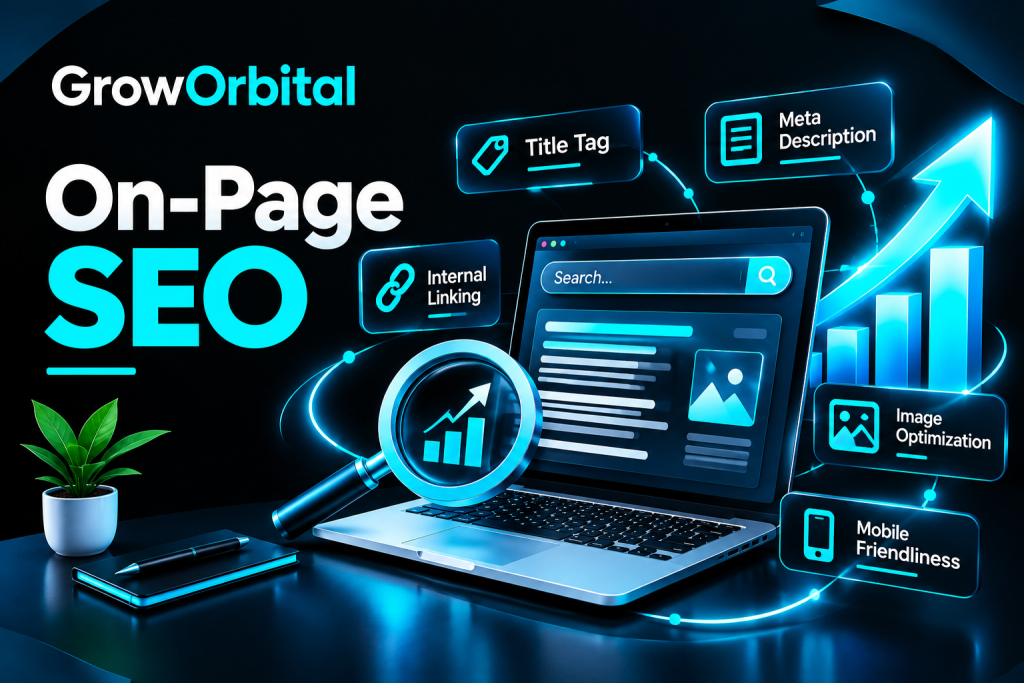
On-Page SEO is the process of improving the different elements on your website to help search engines understand your pages and help the right people find your content. It includes everything from using relevant keywords and writing useful content to improving headings, page titles, meta descriptions, images, URLs, and internal links.
Good On-Page SEO is not just about adding keywords everywhere. It is about creating a page that is easy for Google to understand and, more importantly, easy for visitors to read and use. When your content clearly answers what people are searching for and your website provides a smooth experience, your pages have a stronger foundation for better search visibility, relevant traffic, and long-term growth.From content structure to page experience, every small improvement can make your website more useful and search-friendly. That is why On-Page SEO plays an important role in turning a simple web page into a valuable destination for both search engines and your audience.
Why is On-Page SEO important for websites?
On-Page SEO is important because it helps your website communicate clearly with both search engines and your audience. When someone searches for a product, service, or answer on Google, search engines need to understand which pages are most relevant to that search. Properly optimized content, headings, keywords, page titles, URLs, images, and other page elements make it easier for search engines to understand what your website offers and where it should appear in search results.But On-Page SEO is not only about improving rankings. It is also about creating a better experience for the people who visit your website. Well-structured content makes information easier to find and understand. Clear headings, useful paragraphs, relevant keywords, optimized images, and simple navigation help visitors stay focused instead of feeling confused or overwhelmed. When people can quickly find what they are looking for, they are more likely to explore other pages, understand your services, and take the next step.Another important benefit of On-Page SEO is attracting more relevant traffic. Getting thousands of visitors does not mean much if they are not interested in what your business offers. On-Page SEO helps you create content around the topics and search terms that actually matter to your target audience. This means your website can reach people who are already looking for information, products, or services related to your business.
What Is Off - Page SEO?
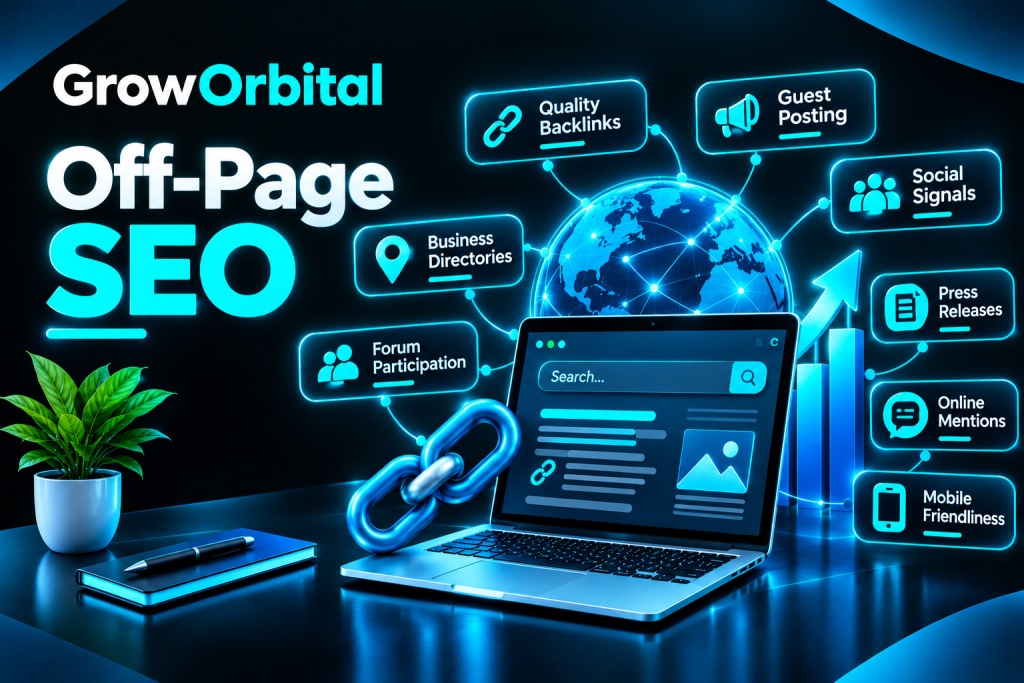
Off-Page SEO is all about the activities that happen outside your website to improve its visibility, credibility, and reputation in search engines. While On-Page SEO focuses on improving the content and elements within your website, Off-Page SEO focuses on building trust around your website through external signals. These signals help search engines understand that your website is valuable, reliable, and worth showing to people searching for relevant information.One of the most common parts of Off-Page SEO is link building.
Off-Page SEO can also involve brand mentions, digital PR, business listings, content promotion, social media visibility, and collaborations with relevant websites or creators. These activities can help more people discover your brand and create additional signals around your online presence. The focus should always be on building a genuine reputation rather than trying to manipulate search results.
Why is Off-Page SEO important for websites?
Off-Page SEO is important because a website needs more than good content to build a strong presence online. Search engines look at different signals to understand how trustworthy and valuable a website is. When other relevant websites mention your brand, link to your content, or share your resources, it can help create a stronger reputation around your website. These external signals can support your overall SEO efforts and improve your chances of reaching a wider audience.One of the biggest benefits of Off-Page SEO is building website authority and trust. Think of it like a recommendation in the real world. If a trusted person recommends your business, people may feel more confident about choosing you. In a similar way, relevant and trustworthy websites linking to your content can provide useful signals about your website’s credibility. However, the focus should always be on earning quality and relevant links rather than collecting as many links as possible.
Off-Page SEO can also help increase your website’s online visibility. Your website may have excellent content, but if nobody discovers it, its potential remains limited. Brand mentions, guest contributions, digital PR, content sharing, relevant directories, and other external activities can help introduce your business to new audiences. This can create more opportunities for people to visit your website and learn about what you offer.
What Is Technical SEO?
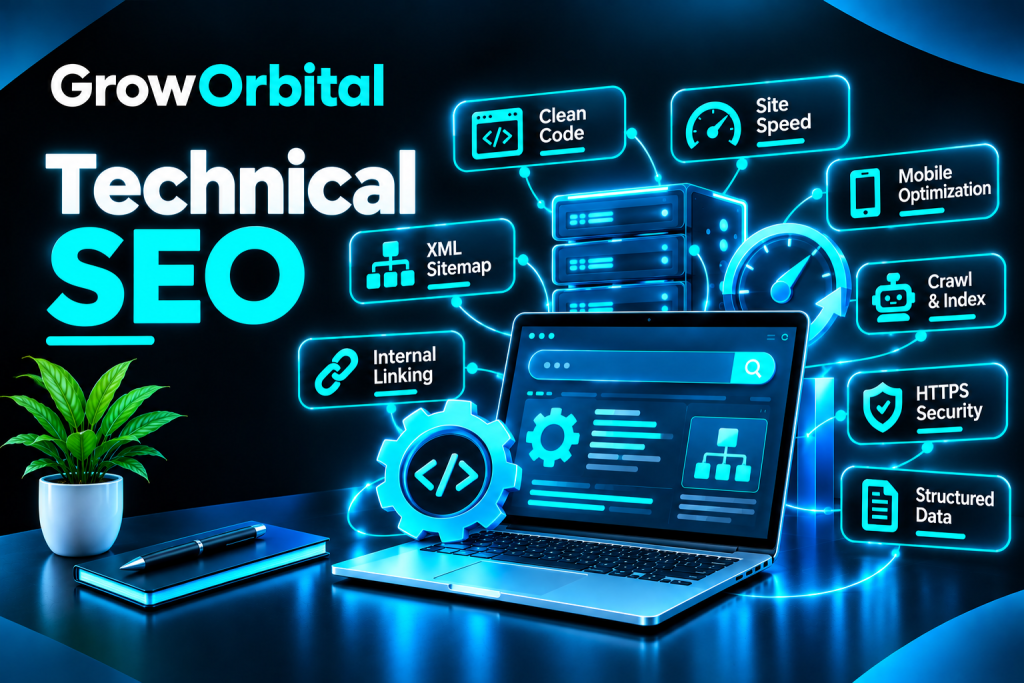
Technical SEO is the process of improving the technical side of your website so that search engines can easily crawl, understand, and index your pages. While On-Page SEO focuses mainly on your content and Off-Page SEO focuses on your website’s reputation outside your site, Technical SEO works behind the scenes to make sure your website has a strong and healthy foundation.
A website can have great content and valuable services, but if search engines have trouble accessing or understanding its pages, your SEO performance can suffer. Technical SEO helps remove these barriers by improving important areas such as website speed, mobile responsiveness, site structure, crawling, indexing, URLs, redirects, XML sitemaps, robots.txt, and other technical elements. These improvements make it easier for search engines to discover and process your website.Technical SEO is also closely connected to the experience visitors have on your website.
Key Elements Of Technical SEO
Technical SEO includes several important elements that help keep your website fast, accessible, secure, and easy for search engines to understand. Website speed is one of the key areas because visitors expect pages to load quickly and work smoothly. Mobile-friendliness is equally important, as your website should provide a comfortable experience across smartphones, tablets, and desktops. A responsive design, optimized images, clean code, and efficient page structure can all contribute to a smoother website experience.
Crawling and indexing are another important part of Technical SEO. Search engines need to discover and understand your pages before they can consider them for search results. A properly configured XML sitemap can help search engines discover important pages, while the robots.txt file can provide instructions about which areas should or should not be crawled. Keeping these settings accurate helps search engines access the right parts of your website without unnecessary confusion.
Your website structure also plays an important role in Technical SEO. A clear navigation system, logical page hierarchy, clean URLs, and relevant internal links make it easier for visitors to move around your website and help search engines understand how different pages are connected. A well-organized structure is especially useful for larger websites where many pages need to be discovered and managed efficiently.
Techniques Of SEO



Black Hat SEO
White Hat SEO
Black Hat SEO refers to SEO techniques that try to improve a website’s search rankings by using practices that go against search engine guidelines. Instead of focusing on useful content, a good user experience, and genuine website growth, these methods often try to manipulate search engines to get faster results. Some common examples include keyword stuffing, hidden text, creating unnatural backlinks, duplicate or low-quality content, cloaking, and using other deceptive techniques.The main attraction of Black Hat SEO is that it may appear to produce quick results, but those results can be difficult to maintain. Search engines continuously improve their systems to identify websites that use manipulative practices. If a website is found violating search guidelines, its visibility can be negatively affected, and in serious cases, pages may be removed from search results. This can lead to a loss of organic traffic, potential customers, and the trust a business has built online.Black Hat SEO can also damage the overall quality of a website. When content is created mainly for search engines instead of people, visitors may find it confusing, repetitive, or unhelpful.

White Hat SEO

White Hat SEO refers to the ethical and search-engine-friendly practices used to improve a website’s visibility and organic presence. Instead of looking for shortcuts or trying to manipulate search results, White Hat SEO focuses on creating real value for visitors. It includes useful and original content, relevant keywords, proper website optimization, quality backlinks, clear website structure, and a smooth user experience.The main goal of White Hat SEO is to build a website that people genuinely find useful and trustworthy. Content is created to answer real questions, solve problems, and provide information that matches what users are searching for. Keywords are used naturally, pages are properly optimized, and links are earned through valuable content and genuine relationships rather than artificial methods.White Hat SEO usually takes time because sustainable growth does not happen overnight. Rankings, traffic, and website authority are built gradually through consistent improvements. The benefit is that your SEO strategy is based on long-term value instead of temporary shortcuts. As your website continues to provide useful information and a better experience, it can build stronger relationships with both your audience and search engines.
Grey Hat SEO
Grey Hat SEO refers to SEO techniques that fall somewhere between White Hat and Black Hat SEO. These practices may not clearly violate search engine guidelines in every situation, but they can still be risky because they often try to achieve SEO benefits through methods that are not completely natural. Grey Hat SEO usually focuses on finding opportunities to improve rankings faster while staying close to the limits of what search engines allow.Some Grey Hat techniques may include aggressive link-building strategies, creating content mainly to target search opportunities, buying or exchanging certain types of links, using expired domains, or making other SEO changes that can provide short-term advantages. The key difference is that these methods are often not as openly manipulative as traditional Black Hat SEO, but they may still create problems if search engines consider them against their guidelines or detect them as attempts to manipulate rankings.The biggest concern with Grey Hat SEO is uncertainty. A technique that appears acceptable today may become risky when search engines update their algorithms or guidelines.

Improve Rankings With Smart SEO Tools & Techniques
Frequently Asked Questions
SEO helps your website appear more easily in search engine results when people search for products, services, or information related to your business. It can help bring more relevant visitors to your website.
SEO can improve your website’s visibility, bring targeted traffic, and help more potential customers discover your business online. Over time, this can create more opportunities for growth.
SEO usually takes time because search engines need to understand and evaluate your website. Results can vary depending on your industry, competition, website condition, and the SEO strategy being used.
Yes, a new website can rank on Google with the right SEO foundation and consistent work. Keyword research, quality content, technical improvements, and a good user experience all play an important role.
Yes. SEO can involve both on-page and off-page activities. On-page SEO focuses on improving your website, while off-page SEO focuses on building your website’s authority and credibility.
A well-planned SEO strategy can help increase organic traffic by improving your visibility for relevant searches. The quality and relevance of that traffic are just as important as the number of visitors.
About Us
Hi, I’m Aman –
welcome to GrowOrbital!
When I started GrowOrbital, it wasn’t just about running campaigns, creating content, or chasing numbers — it was about helping brands grow with the right strategy, creativity, and purpose.I believe great digital marketing is more than just being visible online. It’s about creating meaningful experiences, building genuine connections, and turning ideas into real, long-term growth.

Quick Links
- Home
- About Us
- Contact Us
- SEO
- SMM
- Google Ads
- Email Marketing
- Content Marketing
- Web Development(CMS)
- Privacy Policy
Find your solution
© Copyright by GROWORBITAL