
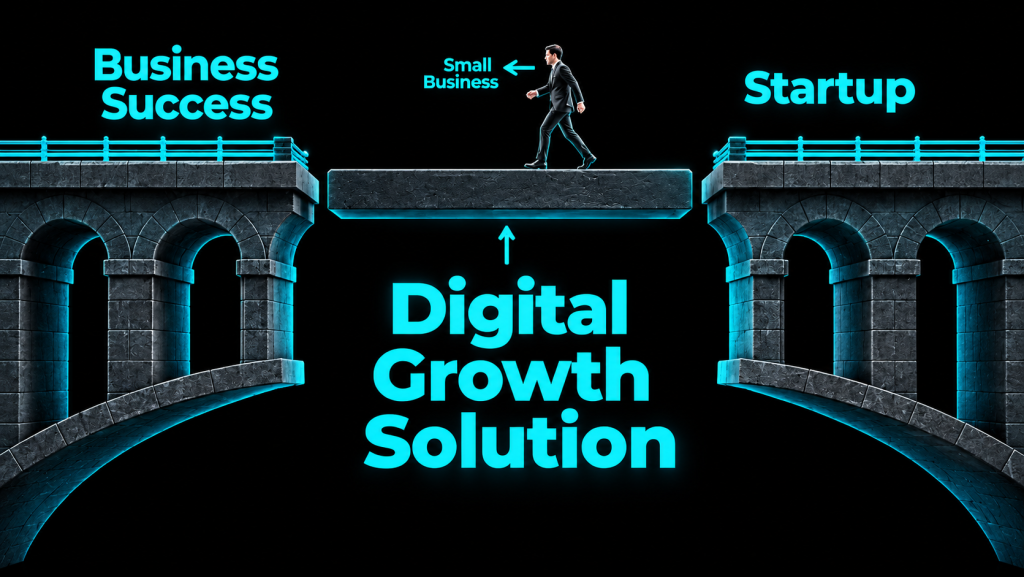
Every business wants to grow. Some want more customers, some want better sales, and others want to build a strong name in their industry. But in today’s digital world, having a good product or service is not always enough. People need to discover your business, understand what makes it valuable, and feel confident choosing you over your competitors.
This is where digital marketing makes a real difference.
Think about how people make decisions today. Before buying a product, hiring an agency, or visiting a local business, many people search online, compare options, read reviews, and check social media. If your business is not visible during this process, you could miss opportunities even when you offer something genuinely useful.
The good news is that you do not need to be a large company with a massive marketing budget to grow online. You need a clear direction, a good understanding of your audience, and a strategy that connects your business with the right people.
Digital growth is not about being everywhere. It is about being visible where your customers are, sharing the right message, and giving people a reason to choose your business.
In this blog, we will explore practical ways to boost your digital growth, attract the right audience, improve your online presence, and turn marketing efforts into meaningful business results.
1. Understand What Digital Growth Really Means
Digital growth means using online platforms and digital tools to help your business reach more people, build stronger customer relationships, generate leads, and increase sales.
However, growth does not look the same for every business.
For an online store, it might mean more product sales. For a service-based company, it could mean receiving more enquiries and booking more clients. For a new business, the first goal might simply be getting noticed and building trust.
That is why you should define what growth means for your business before investing in marketing.
Imagine you run a website development company. Getting 10,000 random website visitors might look impressive, but those visitors will not help much if none of them needs your services. On the other hand, 500 visitors who are actively looking for a website developer could create valuable business opportunities.
The difference is simple: growth is not only about increasing numbers. It is about attracting the people who are most likely to become your customers.
Start by identifying your main objective. Do you want more traffic, qualified leads, sales, repeat customers, or brand awareness? Once you know the answer, it becomes easier to choose the right marketing channels and measure your progress.
2. Build a Website That Turns Visitors Into Customers
Your website is often the first place where potential customers learn about your business. It introduces your brand, explains your services, answers questions, and helps visitors decide whether they want to work with you.
A website should do more than look attractive. It should make the visitor’s next step clear.
Imagine someone visits your website after searching for digital marketing services. If they cannot quickly understand what you offer, who you help, or how to contact you, they may leave and choose another company.
A well-designed website should have clear messaging, simple navigation, useful content, and visible calls to action. Visitors should not have to search everywhere to find your services or contact details.
Mobile responsiveness is equally important. Many people browse websites on their phones, so your pages should work smoothly on smaller screens. Slow loading times, confusing layouts, broken links, and difficult forms can create unnecessary barriers.
You should also include information that builds trust, such as genuine testimonials, examples of your work, frequently asked questions, and clear service descriptions.
Most importantly, make it easy for visitors to take action. Whether you want them to request a quote, book a consultation, call your business, or make a purchase, the process should feel straightforward.
A good website attracts attention. A great website helps turn that attention into action.
3. Use Search Engine Optimization to Get Discovered
Search Engine Optimization (SEO) helps improve your website’s visibility in search engine results. It allows people to discover your business when they search for information, products, or services related to what you offer.
Think about a customer searching for “best digital marketing agency for small businesses.” If your website provides relevant, helpful information and is properly optimized, it has an opportunity to appear in those search results.
Unlike paid advertising, organic search visibility does not depend on paying for every click. However, SEO takes time, and rankings are never guaranteed. Results depend on competition, website quality, search intent, content relevance, and many other factors.
To build a strong SEO foundation, start with keyword research. Find out what your potential customers are searching for and understand the purpose behind those searches.
Next, create helpful content that answers their questions. Optimize page titles, headings, URLs, images, internal links, and page structure where appropriate. Make sure your website is accessible to search engines and provides a good experience for visitors.
Technical SEO also matters. Issues such as broken links, crawlability problems, duplicate pages, and poor mobile usability can affect how effectively search engines access and understand your website.
Do not create content only to insert keywords. Write for real people first. When your content genuinely helps readers understand a problem or make a decision, it becomes more valuable to both your audience and your long-term marketing strategy.
SEO may not deliver instant results, but consistent, useful work can help your business build visibility and attract relevant visitors over time.
4. Create Content That Gives People a Reason to Trust You
People rarely trust a business simply because it claims to be the best. They want to see evidence that the business understands their needs and can offer something useful.
Content marketing helps you demonstrate that understanding.
Your content might include blog posts, educational videos, social media posts, guides, case studies, email newsletters, or answers to frequently asked questions. Each piece should serve a purpose rather than exist just to fill your content calendar.
For example, a digital marketing agency could publish a blog explaining common SEO mistakes made by small businesses. Another post might help readers understand the difference between paid and organic marketing.
These topics answer real questions. They also introduce readers to the agency’s knowledge without forcing them to buy anything immediately.
The best content often starts with a simple question: What does my audience need help with?
Once you understand that, create content that offers a clear answer. Use examples, practical suggestions, simple language, and relevant explanations. Avoid making every post a sales pitch.
You can also reuse strong ideas across different platforms. A detailed blog post can become several social media posts, a short video, an email newsletter, or an infographic. This helps you reach different audiences without starting from scratch every time.
Remember that content marketing is not only about publishing more. It is about publishing something worth reading, watching, saving, or sharing.
5. Grow Your Brand Through Social Media Marketing
Social media gives businesses an opportunity to communicate directly with their audience, share useful content, and build familiarity over time.
But effective social media marketing is not simply about posting every day.
Your audience needs a reason to stop scrolling.
That reason could be an interesting insight, a relatable business problem, a useful tip, a behind-the-scenes moment, or an honest explanation of how your product or service works.
Start by choosing platforms that suit your audience and business goals. Instagram may be useful for visual content and short videos. LinkedIn can help businesses connect with professionals and other companies. Facebook may support community engagement and local visibility. YouTube can provide space for detailed tutorials, demonstrations, and educational videos.
You do not need to manage every platform at once. It is often better to maintain a strong presence on two relevant platforms than to publish weak or inconsistent content across six.
Give your social media accounts a recognizable identity. Use consistent branding, clear descriptions, and content that reflects your business values.
Engagement matters too. Respond to genuine questions, acknowledge comments, and pay attention to the topics your audience discusses. These conversations can reveal what people care about and what they want to learn.
Social media growth takes consistency and experimentation. Some posts will perform better than others, and that is normal. Study the response, learn what resonates, and use those insights to improve future content.
6. Use Paid Advertising to Reach the Right Audience Faster
Organic marketing can help build long-term visibility, but some businesses also need a faster way to reach potential customers. Paid advertising can help achieve that goal.
Platforms such as Google Ads and social media advertising allow businesses to promote their products or services to selected audiences.
Google Search Ads can be particularly useful when people are actively searching for a solution. Social media ads may help introduce your brand to new audiences, promote an offer, or bring interested visitors back to your website.
However, spending money on ads does not automatically produce sales.
A successful campaign needs a clear objective, a relevant audience, a convincing offer, suitable creative, and a landing page that supports the desired action.
Suppose you are promoting website development services. Instead of sending every visitor to a general homepage, you could direct interested people to a dedicated page explaining your website packages, process, benefits, and enquiry options.
You should also track meaningful results. Depending on your campaign, these might include qualified leads, completed purchases, bookings, cost per lead, or return on advertising spend.
Start with a budget you can afford to test. Compare different messages, audiences, and offers. Once you understand which approach performs well, you can make informed decisions about where to invest more.
Paid advertising works best when it supports a wider strategy rather than becoming a substitute for a useful website, a strong offer, and good customer service.
7. Improve Your Digital Growth With Email Marketing
Getting a visitor to your website is only one part of the customer journey. Not everyone is ready to buy the first time they discover your business.
Some people need more information. Others want to compare options, discuss the purchase with someone, or wait until the timing is right.
Email marketing gives you a way to stay connected with people who have chosen to hear from you.
For example, a visitor might subscribe to receive a guide from your website. You can follow up with useful advice, relevant resources, product information, or occasional offers that match their interests.
The goal is to build a relationship, not fill someone’s inbox with constant promotions.
A useful email should have a clear purpose. It might teach something, share an update, answer a common question, or encourage the reader to take the next step.
Personalization can also improve relevance. If someone has shown interest in a particular service, sending them information related to that service may be more helpful than sending the same generic message to everyone.
Always use permission-based email practices, provide a clear unsubscribe option, and respect people’s preferences.
Email marketing can support both customer acquisition and retention. It helps businesses remain familiar to their audience, nurture interested prospects, and maintain relationships after a sale.
8. Understand Your Audience Before You Create a Strategy
One reason digital marketing campaigns fail is that businesses focus too much on what they want to say and not enough on what their customers need to hear.
Your audience is not simply a collection of age groups, locations, or job titles. It consists of people with specific problems, expectations, priorities, and reasons for choosing one business over another.
To understand them better, look at the questions customers ask before buying. What concerns do they raise? What alternatives do they consider? What makes them hesitate? What results are they hoping to achieve?
You can learn from customer conversations, enquiry forms, reviews, support messages, website analytics, and social media comments.
Suppose your business provides digital marketing services to small companies. Your potential customers may not be interested in technical marketing terminology. They may simply want more enquiries, better website visibility, or a clearer way to reach customers.
Your marketing message should reflect those priorities.
Instead of focusing only on the services you provide, explain how those services can help solve relevant problems. Be honest about what you can deliver and avoid promising results that cannot be guaranteed.
When your message reflects the customer’s perspective, your marketing becomes easier to understand and more relevant to the people you want to reach.
9. Track Your Results Instead of Guessing
Digital marketing provides valuable performance data, but that data only helps when you know what to look for.
Without tracking, it is easy to spend time and money on activities that appear successful but contribute very little to your business goals.
Start by choosing a small set of meaningful metrics.
If your goal is website visibility, monitor relevant organic traffic, search impressions, clicks, and keyword performance. If you are running lead generation campaigns, track qualified enquiries, conversion rates, and cost per lead. For an online store, look at purchases, revenue, average order value, and customer acquisition cost.
You can use tools such as Google Analytics, Google Search Console, and advertising platform reports to understand how people discover and interact with your business.
However, do not judge performance by a single number.
An increase in website traffic is useful, but it matters more when those visitors are relevant. A high number of enquiries may seem positive, but you also need to understand how many turn into paying customers.
Review your results regularly. Look for patterns, identify weak points, and decide what needs to change.
Maybe a blog attracts visitors but receives few enquiries. Perhaps an advertisement generates leads, but those leads rarely become customers. Or maybe a service page receives traffic but does not explain the offer clearly enough.
Each situation provides information you can use to improve your strategy.
The purpose of marketing data is not just to show what happened. It is to help you decide what to do next.
10. Improve the Customer Experience at Every Step
Digital growth does not end when someone clicks an advertisement or submits an enquiry form. The experience that follows can determine whether that person becomes a customer.
Imagine someone contacts your business after seeing an excellent social media campaign. They receive no reply for three days, cannot understand your pricing, and have to repeat their questions several times.
Even if the marketing was effective, the customer experience may push them away.
Now imagine the same person receives a timely response, clear information, helpful guidance, and a simple next step. They are more likely to feel confident about working with your business.
Small improvements can make a meaningful difference.
Make contact information easy to find. Respond to enquiries promptly. Explain your process clearly. Keep promises realistic. Make forms simple. Provide useful answers before and after a purchase.
For service businesses, clear communication can be particularly important because customers are often buying expertise and trust rather than a physical product.
For online stores, transparent delivery information, clear product descriptions, and a straightforward checkout process can help reduce unnecessary friction.
Customer experience also influences repeat business and recommendations. Satisfied customers may return, leave genuine reviews, or recommend your business to others.
Growing a business is not only about attracting more people. It is also about giving those people a good reason to stay.
Combine Paid and Organic Marketing for Better Results
Paid and organic marketing are often discussed as if a business must choose one or the other. In practice, they can work together.
Paid marketing can help you reach people quickly, test an offer, and learn which messages attract attention. Organic marketing can build search visibility, provide useful information, and support long-term trust.
Imagine that one of your blog posts receives strong engagement and brings relevant visitors to your website. You could use a paid campaign to introduce that content to a wider audience.
Similarly, data from advertising campaigns may reveal which products, services, or messages generate the most interest. You can use those insights when planning future blog topics, service pages, and social media content.
The two approaches can support different parts of the customer journey.
Someone may first discover your business through an advertisement. Later, they might search for your company name, read your blog, review your services, and finally contact you.
Not every customer follows the same path, but combining channels can give people more opportunities to discover and understand your business.
The important thing is to give each channel a clear role and measure its contribution appropriately.
Stay Consistent, but Keep Improving
Many businesses begin their digital marketing journey with enthusiasm. They publish several posts, launch a campaign, update their website, and expect results to appear quickly.
When growth takes longer than expected, they lose momentum or change their strategy completely.
The problem is that meaningful digital growth often requires consistency.
Search visibility develops over time. Customers may need repeated interactions before they trust a brand. Social media audiences respond to different types of content, and advertising campaigns need testing and refinement.
Consistency does not mean repeating the same activity forever.
It means following a clear direction while learning from the results.
Review your content to see whether it remains useful. Update website pages when information changes. Improve campaigns based on performance. Pay attention to changes in customer needs and search behaviour.
You should also be willing to stop activities that consistently fail to support your goals.
A strong digital strategy is not fixed. It evolves as your business, audience, and market change.
Instead of chasing every new trend, focus on the fundamentals that make your business valuable: useful information, a clear offer, a good customer experience, and a reliable way to measure progress.
Common Mistakes That Slow Down Digital Growth
Even businesses with good products and services can struggle online when their marketing lacks direction.
One common mistake is trying to reach everyone. When your message is too broad, potential customers may not understand why your business is relevant to them. A more focused audience and clearer offer can make your marketing more effective.
Another mistake is expecting instant results from every channel. Paid campaigns may generate early traffic, but SEO and relationship-building activities usually need more time. Understanding these differences helps you set realistic expectations.
Inconsistent branding can also create confusion. If your website, advertisements, and social media profiles communicate different messages, people may find it harder to recognize and trust your business.
Some businesses focus heavily on followers, impressions, or website visits without checking whether these numbers lead to meaningful outcomes. Others run campaigns without proper conversion tracking, making it difficult to identify what is working.
Finally, many businesses forget that marketing and sales need to support each other. A campaign can generate excellent enquiries, but poor follow-up may prevent those enquiries from becoming customers.
The solution is not necessarily to spend more.
Often, the better approach is to identify the real problem, fix the weak point, and make better use of the resources you already have.
Create a Simple Digital Growth Plan
If you are unsure where to begin, you do not need to launch every marketing activity at once. Start with a practical plan that connects your daily work to a clear business goal.
Step 1: Set one primary goal. Decide whether your immediate priority is increasing qualified leads, improving search visibility, generating sales, or building brand awareness.
Step 2: Understand your audience. Identify the people you want to reach, the problems they face, and the information they need before choosing your business.
Step 3: Strengthen your website. Make sure your services, benefits, contact details, and calls to action are easy to understand.
Step 4: Choose the right channels. Focus on the marketing channels that best match your audience and goal. These might include SEO, social media, Google Ads, content marketing, or email marketing.
Step 5: Create useful content. Answer customer questions, explain your services, share relevant knowledge, and demonstrate the value your business provides.
Step 6: Track meaningful results. Monitor the metrics that connect your marketing activity to real business outcomes.
Step 7: Improve and expand. Use your results to identify what is working, fix what is not, and increase investment carefully when the numbers support it.
This process helps you build a strategy around your business rather than following random marketing trends.
You do not have to do everything perfectly from day one. What matters is having a clear direction and improving as you learn.
Conclusion
Digital growth is an important part of building a successful business in today’s online world. It helps businesses reach more people, improve brand awareness, generate leads, and create better customer relationships.
However, real growth does not come from using random marketing tactics. It comes from understanding your audience, choosing the right digital channels, providing useful content, and regularly improving your strategy.
Start with a professional website, focus on SEO, use social media to connect with your audience, and explore paid advertising when it supports your goals. Make sure you track your results so you can understand what is working.
Remember, digital growth is a continuous process. Small improvements, when made consistently, can create valuable opportunities for your business over time.
Frequently Asked Questions (FAQs)
1. What is digital growth?
Digital growth means expanding your business using online platforms, digital marketing strategies, and technology to reach customers, generate leads, and improve business results.
2. How can I boost my digital growth?
You can boost digital growth by building a professional website, improving SEO, using social media marketing, creating helpful content, running targeted advertisements, and tracking your performance.
3. Why is digital marketing important for business growth?
Digital marketing helps businesses reach their target audience, improve brand awareness, promote products and services, and generate potential customers through online channels.
4. Which digital marketing strategy is best for business growth?
There is no single best strategy for every business. SEO, social media marketing, Google Ads, email marketing, and content marketing can all support growth depending on your audience and business goals.
5. How long does digital growth take?
It depends on your industry, competition, budget, and marketing strategy. Paid advertising can generate visibility quickly, while SEO and content marketing generally require consistent long-term effort.
6. Can small businesses benefit from digital marketing?
Yes. Digital marketing allows small businesses to promote their products and services, connect with relevant audiences, and compete for online attention without needing a large traditional advertising budget.
7. What is the difference between organic and paid digital growth?
Organic growth comes from unpaid activities such as SEO and organic social media content. Paid growth uses advertising campaigns to reach audiences through paid placements.
8. Which tools help measure digital growth?
Tools such as Google Analytics 4, Google Search Console, Semrush, Google Ads reporting, and social media analytics can help you measure different aspects of digital performance.
9. Is having a website necessary for digital growth?
A website is not the only way to grow online, but it gives your business a platform where people can learn about your brand, explore your services, and contact you.
10. How can I measure my digital growth?
You can measure digital growth through website traffic, search visibility, leads, conversion rates, sales, customer engagement, and return on advertising spend.